Nibiru
The Sumerian text speaks of a “star” they refer to as Nibiru, the star of Marduk. The actual meaning of Nibiru translates, “place of crossing”, and as many Sumerian words have more than one meaning, Nibiru can also mean a crossing place, as in a road juncture. When Nibiru is used as “star” it is superscribed with a “Mul”. Mul in Sumerian means a heavenly body, such as a star, planet or constellation. Planets in Sumeria also had a connection to a God, so Nibiru was also superscribed with a “d” which refers to the Sumerian word dingir, or god. Even today the planets are named after ancient gods, a practice that came from the Sumerians.The location of Nibiru and colour of the star, is also stated in Sumerian text.
“red star which stands in the south after the Gods of the night have been finished, dividing the sky in half, this star is Nibiru “.
“let Nibiru be the holder of the crossing place of the heaven and of the earth”.
From these texts it seems apparent that if your near the equator, as the region of Sumer was, and you look directly south, in the early morning sky, (after the Gods of the night have finished), then a red star is seen, as if it stands at the cross roads, dividing the southern sky. Hence the name given to the star Nibiru refers to its position in the southern sky, as midway when looking south.
Many experts of of Sumerian text, have miss interpreted, the following two texts, in believing that Nibiru is either the planet, Mercury or Jupiter. That was not the original purpose of the text.
“If Mercury divides the sky and stands there, (It's name) is Nibiru”.
Notice the word “if” precedes Mercury, to show distinction between the two “stars”. What the writer was trying to convey, was that early Sumerians were often confused between these two stars, Mercury and Nibiru, (possibly because they were seen in close proximity to each other or their similar colour) so the text was telling the observer, was that if the star looks like Mercury, but stands fixed in the middle of the southern sky, it's not Mercury, but it's Nibiru.
“When the stars of Enlil, have finished, one big star, although it's light is dim, divides the sky in half and stands there, that is the star of Marduk, Nibiru; Jupiter it keeps changing it's position and crosses the sky.”
Again the writer of these texts is trying to distinguish these two “stars”. Nibiru continues to perplex the Sumerians, in that it looks like a planet, but unlike planets, it is fixed in the southern sky (stands there). The text is comparing it's movement to Jupiter, which crosses the sky. These texts are not as many suggest, referring to Nibiru as being Mercury or Jupiter, but are simply comparing Nibiru to these two planets.
It can be said that Nibiru does not exist in our present day southern sky , so what was Nibiru? There is only four things in our solar system that move across the sky, and they are, planets, moons, comets and asteroids, but Nibiru is fixed in the sky. So by simple elimination, Nibiru cannot be any of these four. So what were the ancient Sumerians seeing in their southern sky?
There is no Sumerian text linking Nibiru and the Anunnaki. There is no text suggesting that Nibiru is the “home planet” of the Anunnaki. There is one piece of coincidence, and that both the Anunnaki and the star Nibiru both vanished from existence soon after the flood occurrence.
My two theories; and they may seem remote to some:
1)That Nibiru was a planet. For some reason this planet exploded and is now seen as the asteroid belt. The Anunnaki were therefore destroyed along with it. It seems to be the simple answer and explains everything.
A German astronomer, Heinrich Olbers, in 1807, in his effort to find the 7th planet, using Bode's Law, found 2 asteroids instead. He would later remark;
“Could it be that Ceres and Pallas are just a pair of fragments…of a once greater planet which at one time occupied its proper place between Mars and Jupiter?”
A German astronomer, Heinrich Olbers, in 1807, in his effort to find the 7th planet, using Bode's Law, found 2 asteroids instead. He would later remark;
“Could it be that Ceres and Pallas are just a pair of fragments…of a once greater planet which at one time occupied its proper place between Mars and Jupiter?”
Could it be these 2 planet like asteroids were at one time Moons of a planets that is now seen as the asteroid belt.
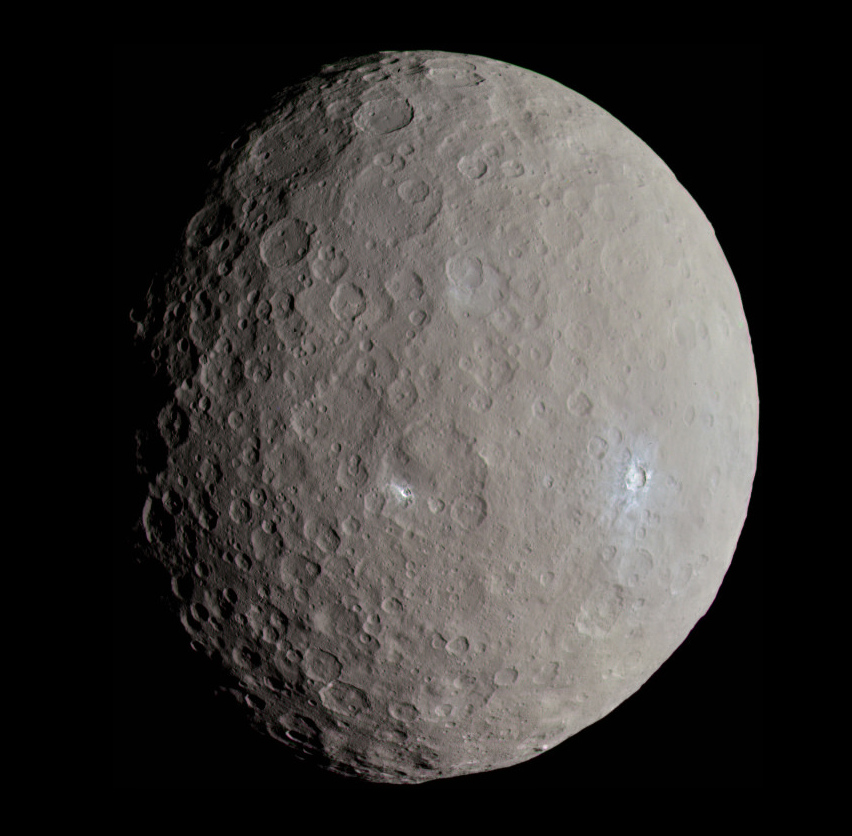
The asteroid belt falls in the region, as predicted by Bode's Law, that should support a planet. Is this the 7th planet, that once existed, the ancients saw, and described in their skies? Those that continue to disregard this, often point to the fact that the asteroid belt's total mass is too small to account for a planet. That's a valid point, but one must consider that most of the planet's material would have been consumed by the Sun, and a large amount collided with the planets and moons of the solar system. Also a large number of Trojan asteroids follow each planets orbits. The Earth, Jupiter, and Uranus all have pilot or Trojan asteroids.
The asteroid belt falls in the region, as predicted by Bode's Law, that should support a planet. Is this the 7th planet, that once existed, the ancients saw, and described in their skies? Those that continue to disregard this, often point to the fact that the asteroid belt's total mass is too small to account for a planet. That's a valid point, but one must consider that most of the planet's material would have been consumed by the Sun, and a large amount collided with the planets and moons of the solar system. Also a large number of Trojan asteroids follow each planets orbits. The Earth, Jupiter, and Uranus all have pilot or Trojan asteroids.
The point of intrigue is that the Sumerians knew of 5 planets, from Mercury to Saturn. Not counting Earth, but they always visualize 7 planets in their art. The point is if Nibiru was a planet, and with the Earth included, that would give them their 7 known planets up to including Saturn.
Below the ancient Stela of Adad-Nirari found in Iraq in 1967, showing at the upper left, the seven orbs representing the seven known planets, and though to also represent Enlil, the symbol of the crescent moon representing Sin and the 8 pointed star of Venus venerating the Goddess Ishtar. The upper right is the winged chariot of the Gods, and a number of symbols representing various Gods. All these symbols are reproduced over and over again in these ancient reliefs and steles.
Below the ancient Stela of Adad-Nirari found in Iraq in 1967, showing at the upper left, the seven orbs representing the seven known planets, and though to also represent Enlil, the symbol of the crescent moon representing Sin and the 8 pointed star of Venus venerating the Goddess Ishtar. The upper right is the winged chariot of the Gods, and a number of symbols representing various Gods. All these symbols are reproduced over and over again in these ancient reliefs and steles.

The stela of Sennacherib below shows the King standing before the symbols of the Great Gods including the winged Chariot of the Gods and the 7 planets.

2nd) The Star of Civilization
An Ancient star existed in the Southern sky, that was thought to begin the advancement of mankind's knowledge. From the study of this star early mankind developed mathematics and science.
A star is basically a fusion reactor, taking two hydrogen atoms with the help of tremendous heat and pressure, producing a Helium atom. As the giant furnace runs out of hydrogen atoms a super giant red star is produced. A super giant red star is very bright and very large. Over 1 million times brighter than a sun and over 1000 times larger. This giant state lasts for a considerable time until this giant red star goes supernova. It explodes and disappears. This results in expanding gas that often forms into recognizable nebulas.
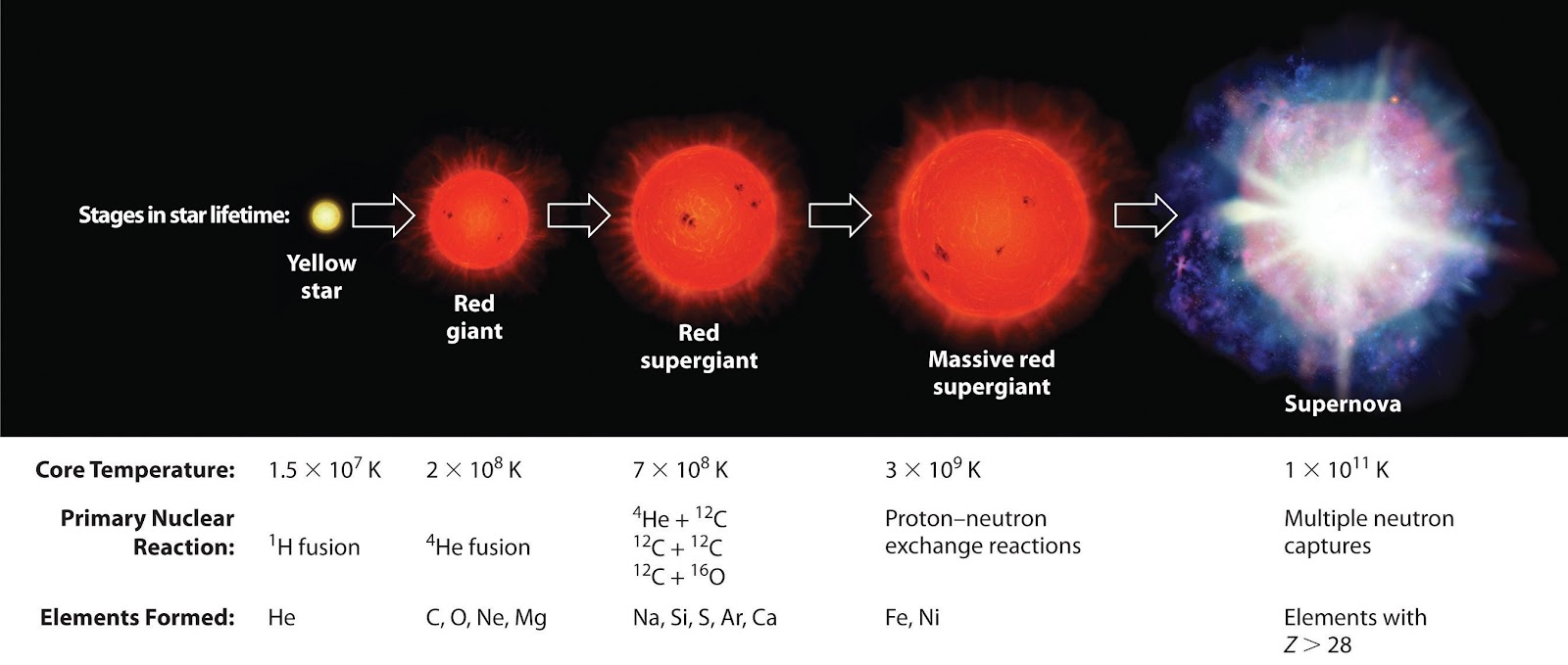
The Vela Supernova exploded some 11,000 to 12,000 years ago, and all that's left is some expanding gas that can be seen today is the Pencil Nebula as seen below.

What is of interest in this Supernova is that it exists low in the southern sky over the Persian Gulf, mid way across the southern heavens. Prior to going supernova this red giant star would have been very visible from ancient Sumeria. Brighter and larger than Venus. Vela Supernova is very close to earth, being only 800 light years away.
The existence of this giant red star is collaborated by the Sumerians calendar which began in 10,800 BC and the Sumerian wrote extensively of this red "star" that was fixed at the cross roads of the southern sky. Not a planet, but a red star that now no longer exists..All this points to the fact that Nibiru was that giant red star of Vela before going Supernova, that the Sumerians wrote about.
Nibiru was not a Sumerian myth or children's story, but it existed and was studied by the Ancients.

This comment has been removed by a blog administrator.
ReplyDeleteThis comment has been removed by a blog administrator.
ReplyDeleteThis comment has been removed by a blog administrator.
ReplyDeleteThis comment has been removed by a blog administrator.
ReplyDeleteThis comment has been removed by a blog administrator.
ReplyDeleteYour welcome .. I keep loosing photos from my site.. I must apologize
ReplyDeleteThis comment has been removed by a blog administrator.
ReplyDeleteThis comment has been removed by a blog administrator.
ReplyDeleteThis comment has been removed by a blog administrator.
ReplyDeleteThis comment has been removed by a blog administrator.
ReplyDeleteThis comment has been removed by a blog administrator.
ReplyDeleteThis comment has been removed by a blog administrator.
ReplyDelete