Pages

Thursday, 9 May 2013

The Sumerian Planet of Nibiru


                                                                        Nibiru
  The Sumerian text speaks of a “star” they refer to as Nibiru, the star of Marduk. The actual meaning of Nibiru translates, “place of crossing”, and as many Sumerian words have more than one meaning, Nibiru can also mean a crossing place, as in a road juncture. When Nibiru is used as “star” it is superscribed with a “Mul”. Mul in Sumerian means a heavenly body, such as a star, planet or constellation.  Planets in Sumeria also had a connection to a God, so Nibiru was also superscribed with a “d” which refers to the Sumerian word dingir, or god. Even today the planets are named after ancient gods, a practice that came from the Sumerians.The location of Nibiru and colour of the star, is also stated in Sumerian text.

                  
            “red star which stands in the south after the Gods of the night have been finished, dividing the sky in half, this star is Nibiru “.

            “let Nibiru be the holder of the crossing place of the heaven and of the earth”.

            From these texts it seems apparent that if your near the equator, as the region of Sumer was, and you look directly south, in the early morning sky, (after the Gods of the night have finished), then a red star is seen, as if it stands at the cross roads, dividing the southern sky. Hence the name given to the star Nibiru refers to its position in the southern sky, as midway when looking south.

            Many experts of of Sumerian text, have miss interpreted, the following two texts, in believing that Nibiru is either the planet, Mercury or Jupiter. That was not the original purpose of the text.

            “If Mercury divides the sky and stands there, (It's name) is Nibiru”.

             Notice the word “if” precedes Mercury, to show distinction between the two “stars”. What the writer was trying to convey, was that early Sumerians were often confused between these two stars, Mercury and Nibiru, (possibly because they were seen in close proximity to each other or their similar colour) so the text was telling the observer, was that if the star looks like Mercury, but stands fixed in the middle of the southern sky, it's not Mercury, but it's Nibiru.

            “When the stars of Enlil, have finished, one big star, although it's light is dim, divides the sky in half and stands there, that is the star of Marduk, Nibiru;  Jupiter it keeps changing it's position and crosses the sky.”

            Again the writer of these texts is trying to distinguish these two “stars”. Nibiru continues to perplex the Sumerians, in that it looks like a planet, but unlike planets, it is fixed in the southern sky (stands there). The text is comparing it's movement to Jupiter, which crosses the sky. These texts are not as many suggest, referring to Nibiru as being Mercury or Jupiter, but are simply comparing Nibiru to these two planets.  

            It can be said that Nibiru does not exist in our present day southern sky , so what was Nibiru? There is only four things in our solar system that move across the sky, and they are, planets, moons, comets and asteroids, but Nibiru is fixed in the sky. So by simple elimination, Nibiru cannot be any of these four. So what were the ancient Sumerians seeing in their southern sky?

            There is no Sumerian text linking Nibiru and the Anunnaki. There is no text suggesting that Nibiru is the “home planet” of the Anunnaki. There is one piece of coincidence, and that both the Anunnaki and the star Nibiru both vanished from existence soon after the flood occurrence.

            My three theories; and they may seem remote to some:
          
            1)That Nibiru was a planet. For some reason this planet exploded and is now seen as the asteroid belt. The Anunnaki were therefore destroyed along with it. It seems to be the simple answer and explains everything.

             A German astronomer, Heinrich Olbers, in 1807, in his effort to find the 7th planet, using Bode's Law, found 2 asteroids instead. He would later remark;

 “Could it be that Ceres and Pallas are just a pair of fragments…of a once greater planet which at one time occupied its proper place between Mars and Jupiter?”
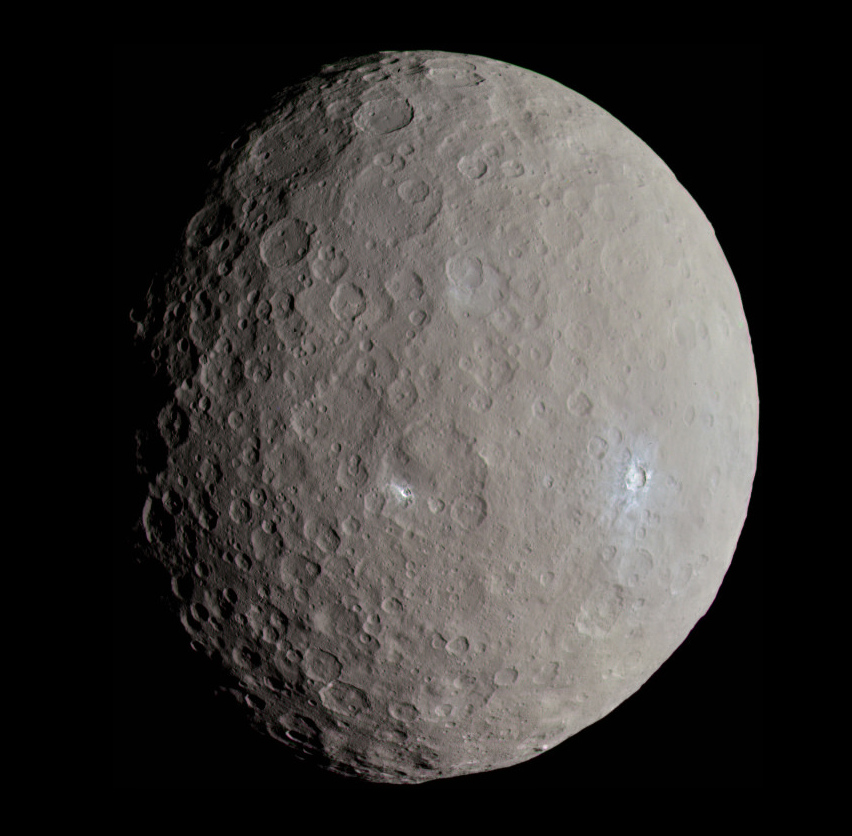


         The asteroid belt falls in the region, as predicted by Bode's Law, that should support a planet. Is this the 7th planet, that once existed, the ancients saw, and described in their skies? Those that continue to disregard this, often point to the fact that the asteroid belt's total mass is too small to account for a planet. That's a valid point, but one must consider that most of the planet's material would have been consumed by the Sun, and a large amount collided with the planets and moons of the solar system. Also a large number of Trojan asteroids follow each planets orbits. The Earth, Jupiter, and Uranus all have pilot or Trojan asteroids.
  
            The point of intrigue  is that the Sumerians knew of 5 planets, from Mercury to Saturn. Not counting Earth, but they always visualize 7 planets in their art.  The point is if Nibiru was a planet, and with the Earth included, that would give them their 7 known planets up to including Saturn.

             Below the ancient Stela of Adad-Nirari found in Iraq in 1967, showing at the upper left, the seven orbs representing the seven known planets, and though to also represent Enlil, the symbol of the crescent  moon representing Sin and the 8 pointed star of Venus venerating the Goddess Ishtar. The upper right is the winged chariot of the Gods, and a number of symbols representing various Gods. All these symbols are reproduced over and over again in these ancient reliefs and steles.


                                      The stela of Sennacherib below shows the King standing before the symbols of the Great Gods including the winged Chariot of the Gods and the 7 planets.


            2nd)                                   The Star of Civilization 
           An Ancient star existed in the Southern sky, that was thought to begin the advancement of mankind's knowledge. From the study of this star early mankind developed mathematics and science.
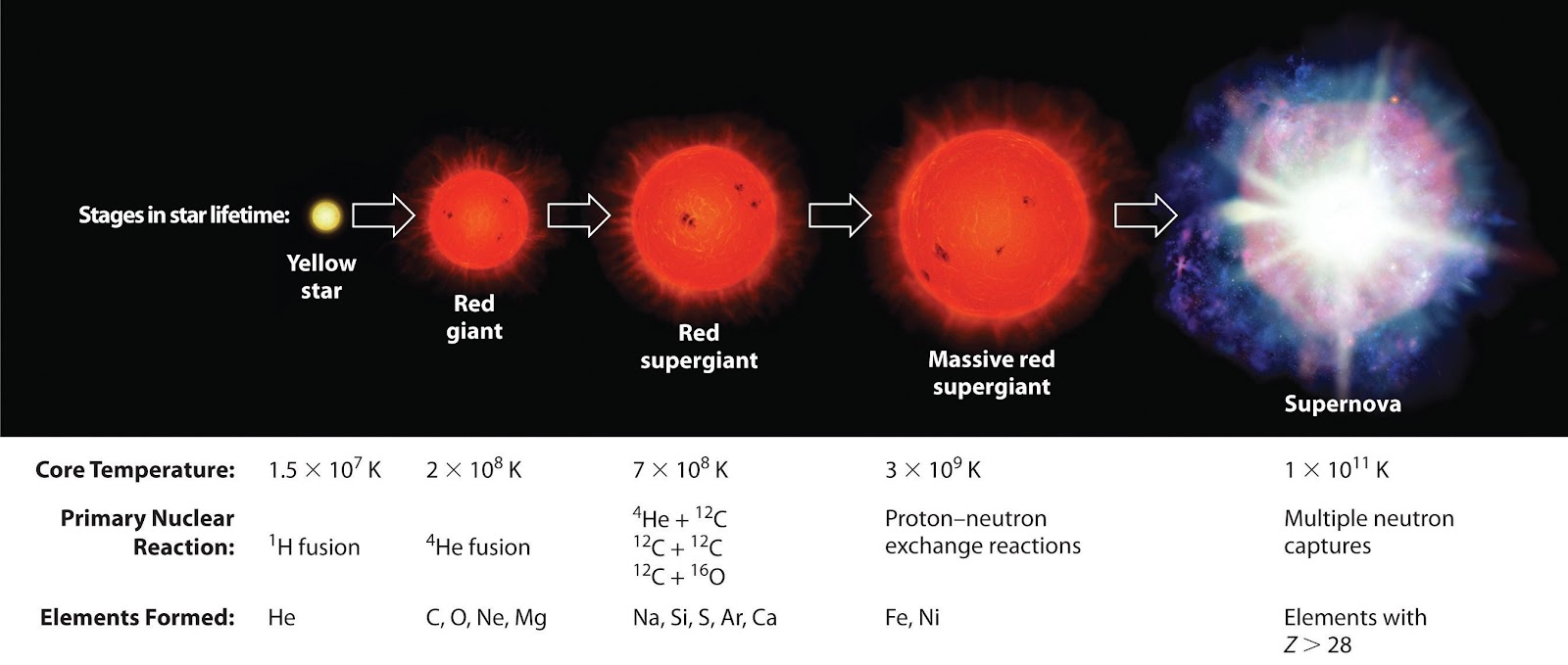
A star is basically a fusion reactor, taking two hydrogen atoms with the help of tremendous heat and pressure, producing a Helium atom. As the giant furnace runs out of hydrogen atoms a super giant red star is produced. A super giant red star is very bright and very large. Over 1 million times brighter than a sun and over 1000 times larger. This giant state lasts for a considerable time until this giant red star goes supernova. It explodes and disappears. This results in expanding gas that often forms into recognizable nebulas.


           The Vela Supernova exploded some 11,000 to 12,000 years ago, and all that's left is some expanding gas that can be seen today is the Pencil Nebula as seen below.


            What is of interest in this Supernova is that it exists low in the southern sky over the Persian Gulf, mid way across the southern heavens. Prior to going supernova this red giant star would have been very visible from ancient Sumeria. Brighter and larger than Venus. Vela Supernova is very close to earth, being only 800 light years away.

             The existence of this giant red star is collaborated by the Sumerians calendar which began in 10,800 BC and the Sumerian wrote extensively of this red "star" that was fixed at  the cross roads of the southern sky. Not a planet, but a red star that now no longer exists..All this points to the fact that Nibiru was that giant red star of Vela before going Supernova, that the Sumerians wrote about.

            Nibiru was not a Sumerian myth or children's story, but it existed and was studied by the Ancients.

            3rd)That Nibiru was seen by the ancients, but cannot be seen today, may indicate that it still exists. but we are unable to be seen, for whatever reason. Is it possible that Nibiru has slipped back in time so that we are no longer able to see this planet? It's like arriving at a location, where your meeting your friend, but he's 10 minutes late, and he's always 10 minutes late, so in effect you will never see him. The Omega symbol may be that link. A link connecting another time line. The ancient Anunnaki in their reliefs were pointing upward, as if they now saw something, as if something can now be seen, that was otherwise hidden. (as in the reliefs below)   Were they in effect looking back in time, while being in the present? Was this the two worlds, or two different states of being that they were trying to depict, between the tree of life?


            In the relief above, taken from the Assyrian palace walls at Calah, we can see two Anunnaki on either side of the Tree of Life, again they're pointing to the throne/chariot above, as if saying, “ Look, we can see it.” This and similar reliefs reoccur time and time again. The ancient people  were simply engraving what the saw, and for the most part, not having any understanding what they were drawing. 


      In above relief, we see the Anunnaki on either side of the tree of eternal life, pointing up, as if drawing our attention to the throne/chariot. As if saying; “Can you see it or can you see me”. What originally appeared as landing feet of the throne/chariot of the gods, are now water (sign of water is a waving line, similar to the Egyptian symbol for water) drawn down, as if they're an extended  with the Omega symbol ( Omega symbol was a symbol of life or the extension of life). These are not landing feet, but are means of which the Anunnaki are able to see, and transfer from the underworld to our world. The figure on the left in the underworld, to the figure on the right in our world, through the tree of eternal life. In Sumeria and in many other ancient societies, the Tree of life, is a phallic symbol, representing the erect penis, and from it eternal life grows. Tree in the Sumerian language is the same word as penis. The Sumerian language also used the same word for water, as the word for semen. Water or irrigated water, was the source of all life, the seed of life, and it represents eternal life.

The gods of Armageddon.  Sometimes they come back ...
In the Assyrian relief above, again we see two Gods knelling between the tree of life, in honour of the Chariot of the Gods. Again the lines linking the chariot sun disc with the Omega at each end.        

 Was the Abzu the means to exit and enter between these two worlds? Would not moving back to a different time line extend your life, hence the perception that the Anunnaki lived much longer than mankind on earth. That Nibiru could still exist today, but only through special set of circumstances are we allowed to see the Universe as it really is. Is this the same for the earth's hidden and dark secret place where no man may find? Are we unable to find this secret place simply because we lack a technology? A technology to see what is hidden. Time will always answer.

For further reading;

http://trueancienthistory.blogspot.ca/2012/11/kronos.html

The Sumerian ABZU


                                                           The Abzu

            The Abzu which is often spoken of in Sumerian text, and literally means “Distant water”; ab meaning water, and zu translates, far, distant or deep. Many experts have deciphered this, as place that originates ground water. Fresh water that maintains life, with the use of irrigation, but is this the true meaning of the Abzu?

            In the Hymn to Elil, the text reads.. “the Abzu which no one can understand. It's interior is a distant sea which Heaven Edge cannot comprehend”. In the curse of Agade, the text reads.. “Abzu... where the fates are determined”. In Sumerian text the Abzu is always preceded by the article “the”, which lends the belief that the abzu is a state of being or state of mind v.s. a specific location. As an example one might say they are going to New York, a specific location, or they may say they are planning to go to “the” city, which implies a state of being, as in shopping, nite life or dinning out.

            In the Sumerian text relating Inana, (Enki's daughter) and Enki; Inana speaks, “I shall direct my steps to Enki, to the abzu, to (Eridu), and I myself shall speak coaxingly to him, in the abzu, in (Eridu). Directed her steps all by herself towards Enki's abzu  in (Eridu).....Enki the King of the Abzu. ...The lord (Enki) looked up at the abzu.”

            It becomes apparent that the Abzu, is something that is a lot more than a simple source of underground water.  We know that from these texts that Enki is the source of the Abzu, and it is located in his city of Eridu. Enki is also recorded in the above text, to have to look up to the see the Abzu. To have to look up in a land that is extremely flat, must mean that Enki is looking up to the top of the highest building in Eridu, which would be the temple, Ziggurat. This is confirmed by a fragmented text, of the Heron and Turtle, which reads.. “Then on the Ziggurat...King Enki was on the Ziggurat, the great brickwork of the Ziggurat...the abzu, the brickwork of the abzu.”


            In the middle figure (1) above an Anunnaki is climbing the Ziggurat at Eridu ,the 7 tiers of the structure are shown as coned levels, to speak to Enki, seated on his throne to the right, which is surrounded and encased by water.(Water is indicated by long wavy lines) Notice also that on the far left and far right are his attendants with their water poles. Could not this be the Abzu, that Inana speaks of when she wishes to speak to Enki? The second figure on the left is a Great God coming out of the Abzu atop the Ziggurat. The Abzu here seems lined with woven reeds, the same method used to build their boats and make their roofs water tight. The reeds are needed to keep the Abzu water tight to support a pool of water. Notice that the Ziggurat is always illustrated using the same markings in each illustration,as in many rounded conical triangles. This helps the viewer in understanding the depictions.

            In the figure (2) below Enki is seen climbing to the top of the Ziggurat at Eridu, followed behind by his minister Isimud (to his right). At the top of the Ziggurat, an Anunnaki  is coming out of the Abzu, while water is being poured on top of him, as if exiting from a watery state. Notice again the Ziggurat illustration is always duplicated as stacked cones. Is this the location of the Abzu, that is a state of being, rather than a specific location, mentioned in Sumerian text?


            If the Abzu represents a state of being, rather than a defined location atop the Ziggurat, then it must refer to a ceremony, a purification, or inauguration of some importance.


           In the figure (3) above and below, we see Enki again, surrounded by a water enclosure, with his two attendants and poles, on either side of him. This depiction is seen as a top view, as if looking down from atop the Ziggurat, with Enki about to leave, his Abzu. In the curse of Agade, the text reads.. “King Enki,emerges from the Abzu.”


      In the figure (4) above we see the Enki , inside Abzu, atop the Ziggurat with his 2 pole bearers. This all raises the question. What exactly is this ceremonial practice, and what is it's purpose? The Sumerians speak of a “washing of the hands” ceremony, which occurs at the site of the Abzu or in the Abzu. If the washing ceremony occurs in the Abzu, could it refer to a full emergence into water, or through water, as a number of the figures above seem to indicate. In the creation of man text, it speaks of Enki taking clay to form man at the Abzu. In the curse of Agade text, it reads, “May your clay be returned to it's Abzu.” This seems to indicate that “life, creation of life , or the extension of life” would have a significance to understanding the Abzu and it's ceremonies.


            In figure (5) above we see an Anunnaki emerging from the Abzu atop the Ziggurat as depicted at the very bottom of the relief. Two upturned vases are pouring water into the vases at the bottom of the relief. The Anunnaki seems to have control over the water.  At the bottom of the figure are four wheels of 8 spokes. They represent the wheels at the four corners of the Chariot of the Gods, as does the other four wheels with 16 spokes. The wheel within the wheel. There is clearly a strong connection between the Chariot of the Gods, and the Abzu, which together enhances the abilities and life of the ancient Gods.


           In the above figure (6), again the water is pouring from the top vases to the bottom vases as in the Abzu, while the occupant of the Abzu seems to be in a state of ecstasy and is some how connected to the Chariot of the Gods, similar to figure (5). This is very similar to the depictions of Enki and his ability to control water from his body. The Sumerians had the same word for water as for semen, which meant "the beginning of life or the renewal of life", just as irrigated water brings life to a desert. The above figure also seems overjoyed if not in a state ecstacy while in the Abzu. The water is somehow transformed from the Chariot as it enters the Abzu. Both of the above figures are gaining a renewal of life as the water passes over them.

           The real purpose of the ABZU? The Abzu is able to transform water to allow the Great Gods to extend their lives. Once in the Abzu they totally immerse themselves in it's water. Without the Abzu the Great gods would simply have grown old like the rest of mankind and eventually died. They had to continually enter the Abzu and immerse themselves in it's water in order to extend their lives. This is the state of being that is referred to as "entering the Abzu". A state of rejuvenation. An exhilarating moment where water itself can be controlled and where one seems to levitate inside the Abzu.   This act of growing younger is seen in an ancient Assyrian scroll shown below. An old man becomes young again as they are about to drink water from the chariot..     


                                                       It's clear that the Abzu is controlled by Enki. This is shown (figure 7 below) by how Enki is depicted in ancient reliefs. The seven stepped Ziggurat is seen as a great god approaches Enki.  Enki is seen having water or controlling water from his body, with the pole bearers on either side. Enki is seen to the right  atop the Ziggurat, as shown by the figure on left, and at the centre of the Abzu, with water surrounding him.
(figures below shows the 2 pole attendants)


                    The wavy lines represent water in Sumerian drawings, and it's this water that has been transformed by the chariot of the Gods and is about to be extracted by the figure on the left..This is the water that these Great Gods immersed themselves in the Abzu and extend their lives...This is what is represented by the Tree of life in the middle of the figure..
The water after being transformed....and now gives life.


            The great god shown above is not taking water to the tree of life as many have suggested but taking this transformed water away to be used to extend their lives. This is shown by the bucket in the figures hand.

            Enki's position within the Anunnaki is greatly enhanced due to his control of the Abzu and his possession of the Tablets of Destiny. The combination of these two items which either enhance, empower or entitle each other, makes Enki a very important and powerful personage.

            In the Sumerian text of the curse of Agade, Ninurto takes from Agade all it's wealth, just prior to it's destruction, to Enki's Abzu. The text also reads that the Abzu at Agade has it's poles removed. Thus terminating the ability or power of the Akkadian Abzu. The text also refers to the wealth of Agade's royal throne room. This wealth is stripped from Sargon's royal family. Where does the wealth of Agade's Treasury end?

            The text reads, “Ninurto brought the jewels of ruler ship, the royal crown, the emblem and the royal throne bestowed on Agade.” In Isaiah chapter 45, YHWH speaks of a dark and hidden place, that No man may know, where the treasures of the kingdoms of earth are hidden. After Enlil destroyed Yahweh's political kingdom on earth, the Akkadians, and Enki took all their treasures prior  to the fall of their capital city Agade, was Yahweh retaliating in seizing many iconic earthly treasures of earthly kingdoms, just prior to their downfall? Did Yahweh seize Babylon's earthly treasures just moments before she fell to Cyrus the Great?  Isaiah 45:3, reads as if speaking to Cyrus, “And I will give you the treasures of darkness, and the hidden riches of secret places,..” The word “darkness” would refer to a  fearful and forbidding place to man, while “hidden” and “secret” would refer to, No man being able to find these iconic treasures.

           Are these treasures stored in an ancient Abzu?

           To name a few treasures that no man has found, would be the ark of the covenant and the Cup of Samurais, which weighed 15 talents of gold, or about 1500 lbs. This was essentially a very expensive punch bowl, for rather lavish parties. Golden icons were never melted down or destroyed in ancient times, but seen as war booty, to display over ones enemies. It wasn't until the Greeks, that gold was a means to pay foreign trade accounts or used as a currency reserve. Prior to the Greeks, gold was basically bathroom fixtures for the ruling class. Would many of these iconic pieces, still be hidden from us?

For further reading;

http://trueancienthistory.blogspot.ca/2013/05/the-babylonian-history-of-mankind.html


Wednesday, 1 May 2013

Peoples and Languages shifting through Time

                                The Peoples of Three Deltas

      From the beginning of known history, mankind's civilizations have developed from humans living in three deltas. The Indus Valley to the east, the Mesopotamia Valley, between the Tigris and Euphrates rivers, and the mighty civilization of the Nile river.
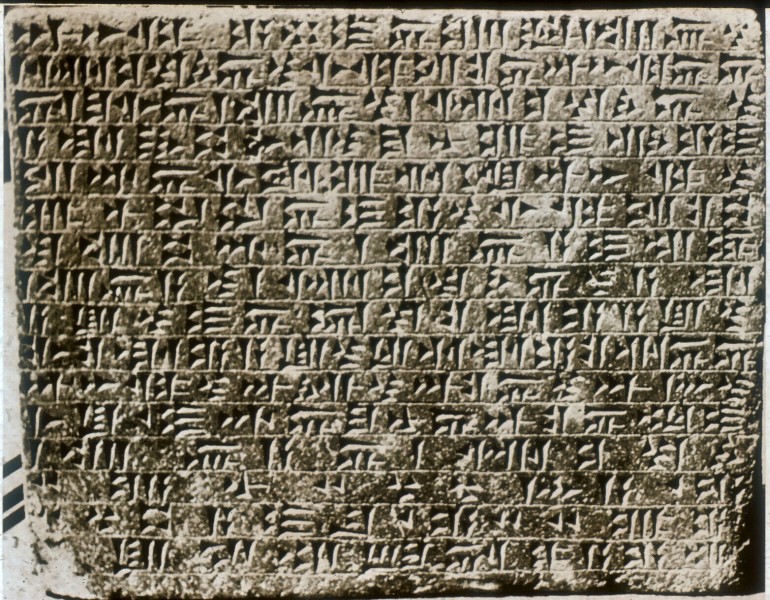
     The Mesopotamian valley produced mankind's first written language, which was from the Sumerians. The Sumerian language was distinct and to this date has no real association to any other language.Their style of writing was called cuneiform writing, and basically was the generally accepted style of writing, that lasted until finally disappearing in 1 AD. Their language was unique and so was their culture, and religion. From the Sumerians mankind has copied, and mirrored the Sumerian fundamental customs and beliefs.


Cuneiform text that lasted as the dominate written language for several thousand years. How was Sumerian cuneiform language deciphered? The key was the Akkadians as the following script (Sacred Text) testifies;

          First, the linguistic difficulties. Sumerian is neither a Semitic nor an Indo-European language. It belongs to the so-called agglutinative type of languages exemplified by Turkish, Hungarian, and Finnish. None of these languages, however, seems to have any closer affiliation to Sumerian, and the latter, therefore, as yet stands alone and unrelated to any known language living or dead. Its decipherment, therefore, would have been an impossible task, were it not for the fortunate fact already mentioned that the Semitic conquerors of Sumer not only adapted its script to their own Semitic tongue, but also retained it as their literary and religious language. As a consequence, the scribal schools in Babylonia and Assyria made the study of Sumerian their basic discipline. They therefore compiled what may be described as bilingual syllabaries or dictionaries in which the Sumerian words or phrases were translated into their own language, Accadian. In addition they also drew up interlinears of the Sumerian literary compositions in which each Sumerian line is followed by its Accadian translation. Accadian, being a Semitic tongue related to numerous known languages, was deciphered relatively early. And so these bilinguals became the basic material for the decipherment of Sumerian, for by comparing the known Accadian word or phrase with the corresponding Sumerian, the meaning of the latter could be deduced.


      Further to the North, along the Euphrates were the Akkadians, who were of the first ethnic group called Semitics. They had their own language, but not their own written language, so they just used, or borrowed the Sumerian written language. In many ways the Sumerian cuneiform text was unsuited for the Akkadian language, but served the region for several thousand years. The Akkadian language was the very first in a long line of language development that would much latter be called Hebrew.

      After both of these ethic peoples disappeared the Babylonians and Assyrians took centre stage in the Fertile Crescent. This was the fertile land marked in green on the map which formed a natural crescent shape. Both Babylon and Assyria spoke the same language, one step removed from the ancient Akkadian's Hebrew. The Babylonians and the Assyrians were also basically a Semitic people. The capital of Assyria was Nineveh on the upper Tigris, while Babylon was on the Euphrates. The Assyrians and Babylonians did something quite unique in history. After defeating their opponents in war, they would often force that entire nation with all it's people to migrate to a new distant land. Basically vacating the entire region. Their reason for doing this was very effective. It stopped rebellions. Once a people are moved to a new land they are forced to raise crops and build shelters, not raise rebellions. The Assyrians were the first to have a professional army, using road systems and base camps to control their empire. Their most daunting weapon was their war chariot, and it was't until the Greeks, that infantry was able to successfully stop the chariot.

      The last of the Semitic people were those that lived in the land of Canaan. Their language was another step closer to today's Hebrew, and with a lot of help someone today who understands Hebrew, would with some degree of difficulty, make out what a man from ancient Canaan would be saying.


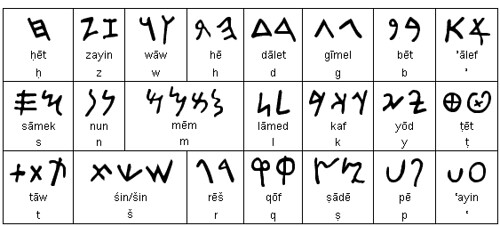
     Modern Hebrew above, while ancient Semitic peoples used cuneiform text. It wasn't until the 15th Century BC that the Canaanites developed the first written language using an alphabet, as in the figure seen below. By the 10th Century BC there existed two distinct forms of written languages; Canaan and Aramaic. Aramaic being the forerunner of Hebrew. The short comings of these written languages is that they were both deficient of vowels. It wasn't until the Greek's written language that a true alphabetic language was used, that included vowels. Ancient Canaan language below


     The people from Elam, whose ancient city was Susa, lived to the east of the lower Tigris. Susa was sacked and burnt to the ground by the Assyrians, and later occupied by the Persians. The Meds (allies to the Babylonians) were to their north and the Persians to their east, and all these peoples were all not Semitic people, nor did not speak a form of Hebrew.

     The other great and powerful group in the area were the Hittites. They were a Indo-European ethnic group. The Hittites lived in Asia Minor, and were well documented in the Bible and in Egyptian writings. For most of our modern era they were denied to even have existed, but after the Rosetta stone, which finally allowed us to read Egyptian text, they appeared in our history. They were eventually conquered and destroyed by the Assyrians.

      The most famous peoples in the region were the Egyptians, who lived on the Nile River. Their people and their culture was protected by nature itself. The Red Sea to the east, and the Great desert of Africa to the west. This was the main reason Egypt lasted as an independent society to the time of the Romans. The Egyptians were also not a Semitic people. Their language, and written language were totally unique, using Hieroglyphs as their writings, unlike anything else written. Their written language was more regional, and was kept primarily inside Egyptian borders. When a King of Egypt wrote  to a subordinate territory, the text was often in cuneiform, and not in Hieroglyphs. Even though Egypt was a very early ancient world power, their written script, language, culture and religion, was kept primarily within their borders.


Hieroglyphs were a colourful script depicting pictures

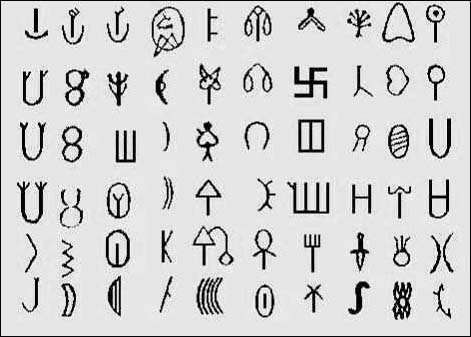
     Probably the most unusual and most misunderstood group would be the Hurrians. The Hurrians lived north of the Fertile Crescent near Van Lake, and their principle city was Nuzi. Notice the similarity to Nazi. They spoke a Hurro-Urartian language some say is related to early Northeaster Caucasian languages. The Hurrians were considered the original Aryans. Some would suggest that the word Hurrian should read Harrian, which is close to "aryian. They were a dominate people, and according to Sanskrit writings , moved against the Indus valley where they defeated these peoples. Even today the destruction of the civilization in the Indus valley has many questioning how such a complete destruction could occur. One point of interest, is the Hindu word "caste", actually means colour in Aryan. A "caste" is a way that society in India , segregates those of different class. Colour has long been one of these means to segregate people. The written language of the Indus has never been deciphered. One of the reasons for this is that not enough of their written language has been found.


                     Image result for ancient indus script

An example of Indus script.
                                              

A comparison of Indus and Easter Island text

     An interesting side note on the written language of the Indus valley is that it has very similar characters to the written language of Easter Island, as seen above. With the discovery of Easter Island, came slave traders and missionaries. The Island was almost completely depopulated, and those few that were left were forbidden to read their language as it seemed to be connected to their pagan religion. Most of the wooden reliefs that contained their language were destroyed, and with it, the eventual ability to decipher  their language.

     On the very edge of the Great Sea as it was called in ancient times or now known as the Mediterranean, were a sea going people. Their language again was different, but what was most different was their written language. It was a form of early Greek.These people were the Sea People as the Egyptians called them, but they were later called the Phoenicians. With their sea trade the Phoenicians took their written language, throughout the Sea's they traveled. The last of the Phoenician settlements was the Great Sea going city of Carthage.

                       Related image


Phoenician text
      As each national group dominated this ancient region so to their language and their written language would dominate. This was true of the Greeks. As they politically dominated the region so to did their language and the use of the \Greek alphabet. History follows winners, and the losers disappear. The simply reason for this is winners write history losers don't. Language and culture is spread and changed through war. History did not follow the Persians after their defeat at the hand of Alexander the Great, it followed Greece. By 200 BC the Greek language was dominating the known world. The New Testament was originally written in Greek.


Greek text
      Many people suspect that history follows the good, the righteous, since the good win the battles fought, but throughout history more than 1/2 the battles were won by the bad and the ugly. Only after winning does history report the eventual winner as good and upright. When you win, you get to write your own history, while losers are forced to accept the consequences of being deemed evil.

      Churchill told the President of the US an important historical point, "Why just be apart of history when you can write history". Winners get to write their own history.

      An example of this is the Treaty of Versailles signed at the conclusion of the 1st WW. Germany was forced to sign a document, that clearly stated Germany started the 1st WW. Why was this necessary? Simply because England and France clearly wanted to change history. They did not want anything other than the history that they chose to write to be the accepted recorded history. Prior to the Great War, France was itching for a chance to go to war with Germany after the period with Bismarck. England had spent decades demonizing the Germans, after Germany grew in strength and importance under Bismarck, to the chagrin of England, the World Power. England was waiting for an opportunity to go war against these upstarts, particularly after the death of Queen Victoria, since the Kaiser was the Queen's oldest grandson, subsequently Victoria being very pro German. Prior to the Queen's death, England was consolidating her world Empire and had no interests in the dealings of Europe. This all changed with the death of Victoria, and the embarrassment of the Boer War. Under General Kitchener the British were totally outmaneuvered by a bunch of Dutch Farmers, and similar to the American's military embarrassment in Vietnam, England's military was now looking for an opportunity to redeem themselves from the world's opinion. Kitchener's biggest debacle was the setting up of civilian concentration camps (1st ever in history) for the women and children of these Dutch farmers. Of the 107,000 civilians in concentration camps over 1/4 died from malnutrition, heat exhaustion and lack of medical attention. The Canadian Strathcona Horse were given this unenviable job of burning homes and rounding up Dutch women and children, which resulted in many children dying of heat hydration and disease.

      France to this point had been isolated in Europe by the "magic man" Bismarck, but after his death his many treaties to keep peace while at the same time allowing Germany to expand, were now expired. This resulted in both France and England signing numerous pacts. These war pacts had only one adversary in sight, and that was Germany.

      There was a number of incidents that would lead the world into the Great War.
1) The uprising in Morocco in July of 1911, which the Germans felt was an excuse for the French to now occupy Morocco started these events. This resulted in the German's sending their fleet to save guard their interests. Not a serious story, but for one major point. The British also sent their fleet, to protect their interests, but arrived 2 days later than the German's. Churchill was astonished at the speed of the German fleet. He later discovered that the German fleet was powered by oil,  not coal as the British fleet was. This allowed the German fleet to cruise at nearly 25 knots while the British fleet only managed 10 knots. This was a direct threat to the British Navy, who had long been the rulers of the seas.
      Churchill needed oil and quickly so he made a controlling company that would have large interests in the Ottoman's territory of what is now Iran and Iraq. The Ottomans were pro German and this would lead to the British later military involvement in the middle east, with General Allenby in Palestine and the Battle for the Dardanelles.

2) The building of the Kiel Canal in 1887, which allowed German ships to directly enter the Atlantic from the great ship building port city of Kiel. This was not significant until the canal was enlarge so German dreadnoughts could easily sail straight into the Atlantic in 1914.  This then would be an immediate threat to the British Navies supremacy. Just prior to the Great War at the opening of the Canals widening many foreign fleets were allowed to visit. An American Admiral at this opening clearly stated to a German naval commander that this would be their last friendly meeting, because war was coming. The British were clearly looking for an excuse to go to war against Germany.

      They finally got their opportunity when a Serb, killed a prince of the Austrian Hungarian empire, resulting in actions by the Germans to control this para military terrorists group. This was strictly an internal action which was of no concern to the rest of the world, but within months the whole world piled on the Germans declaring war against them. The awkward point of all of this is decades later NATO goes to war against Serbia for doing the exact same thing, Serbia having conflict with their neighbours. Did Germany go to war against NATO for NATO's action against the Serbs? Written history is very political and is often used by nations to support or hide the real truth. It should never be taken at face value.

      After the fall of Greece; Rome and it's language took centre stage. Latin became the dominate language through the known world. From Latin emerged English and French.


                  As Old Italic𐌀𐌁𐌂𐌃𐌄𐌅𐌆𐌇𐌉𐌊𐌋𐌌𐌍𐌏𐌐𐌒𐌓𐌔𐌕𐌖𐌗As
                       LatinABCDEFZHIKLMNOPQRSTVX
             

Latin text
Roman Latin uses the alphabet letters that are common to modern western languages.

      What is most noticeable is the shifting of power and languages as it moved North and West. Most importantly these peoples carried with them the knowledge of agriculture. Not just the farming knowledge of cultivation and irrigation, but the separation of seeds that produced higher yields with the same maturity. This is the practice that started in Sumeria and Babylon with the cultivation of barley. Large scale food production allowed for the very beginning of civilization.

      As power shifted out of the Mesopotamia region through what is now Turkey into the great productive lands of Europe, so too began the competition for these lands. This would  eventually result in the many wars that would rage across most of Europe.

      There is 2 most noticeable differences, between WW1 and WW2 from Germany's point of view. The 1st WW required coal to generate steam power, and horses to produce horse power, both of which could be internally managed. In the 2nd WW petroleum products were required, along with various base metals, and petroleum products none of which Germany had. The 2nd WW would require Germany to rely on other nations to supply them with these necessary elements of war, or they would require planning.

      England and America winning both World Wars, is a reflection of English dominating the worlds languages, and German taking a rather diminutive position. Germany being looses in both wars contributed to their language and culture being supplanted by English. We study English because of wars, just as the ancient world wrote in Greek, because of wars.

Another blog you might be interested is;

http://trueancienthistory.blogspot.ca/2013/05/dagan-first-god-of-semitic-people.html


Thursday, 25 April 2013

The Search for the Lost Ark of the Covenant

                                Searching for the Ark

     Beliefs have long been known to be stronger than iron. Iron can be molded, and bent, but beliefs once they are learned at a young age are fixed for life. Nabonidus as a young man was taught by his mother, a priestess of Sin, her religious beliefs. These beliefs would follow Nabonidus throughout his life.

    After he became King of Babylon his beliefs would direct him in rebuilding the temples of Sin throughout the empire. This was in stark contrasts to the beliefs of the clergy of Babylon that had long followed the worship of Marduk. This would have led to many religious confrontations. Nabonidus seemed reluctant to see the gathering dark clouds of discontent, which would ultimately bring his demise as King. Instead he left the ruling of Babylon in the hands of his regent son, and set off to discover and fulfill ancient prophecy. These were all taught to him by his mother at a young age.

     Nabonidus didn't live in the riches, wealthiest, most prosperous city in the world Babylon, but chose to move to a rather isolated, remote location in his empire. That city is known today as Tayma, but in ancient times it was called Tema, and even in older times it was called Tiamat. An ancient trade route town in a oasis, in Northwestern Arabia, on the edge of a desert, Lawrence of Arabia called the Devil's Anvil.
     Tayma Oasis


The following text is from the cylinder of Nabonidus;

, he started out for a long journey. The military forces of Akkad marching with him, he turned to Temâ deep in the west. He started out the expedition on a path leading to a distant region. When he arrived there, he killed in battle the prince of Temâ, slaughtered the flocks of those who dwell in the city as well as in the countryside. And he, himself, took residence in Temâ, the forces of Akkad were also stationed there. He made the town beautiful, built there a palace like the palace in Babylon. He also built walls for the fortification of the town and he surrounded the town with sentinels. The inhabitants became troubled. The brick form and the brick basket he imposed upon them. Through the hard work they [lacuna] he killed the inhabitants, women and youngsters included. Their prosperity he brought to an end. All the barley that he found therein [lacuna] His tired army [lacuna] the hazanu-official of Cyrus...


Location of Tayma in Arabia.

     Tiamat in Sumerian text, was the ancient goddess of the Great Gods of Sumeria. Tiamat decided to wage war upon the other Gods after a conflict arose. Her consort and spouse Kingu was given the command of the armies and given the Tablets of Destiny to enhance his strength. He was overpowered and defeated by the Babylonian God Marduk. The same God that the Babylonians worshipped in Nabonidus's day. Tiamat seems central to this ancient battle of the Gods. In Greek mythology Zeus defeats Typhon in an epic battle to become supreme ruler near a location close to Tiamat. Might not the battle of Marduk over Kingu, be the same battle as Zeus over Typhon. After the battle Marduk takes the Tablets of Destiny from Kingu in victory.

       It is this ancient battle and the loss of the Tablets of Destiny that Nabonidus sees himself as part of prophecy. Nabonidus doesn't move and live in a one horse town on a trade route to control and protect the spice trade. He could of sent anyone to do that for him. He lives in Tiamat for over 10 years, with only one purpose. To rebuild the temples to Sin, and return the Tablets of Destiny to Tiamat, their rightful owners. Nabonidus sees himself fulfilling prophecy. This may seem difficult for us to believe, but all beliefs even today are often hard to understand or even approve.  

     Where did Nabonidus get the Tablets of Destiny? From the Great Treasury of Babylon. Nabonidus took from the Treasury the Ark of the Covenant, which was taken from Solomon's temple after the defeat of Judea. Many other iconic treasures, were also removed from the treasury of Babylon and taken to Tiamat.. They would have included the famous "Cup of Semiramis" which was to have weighed 15 talents of gold, or some 1250 lbs. , and also the famous full size golden statue of an ancient King, that Daniel described in his prophecy in Daniel chapter 2 from a dream of the King.

      It was the Ark that Nabonidus wanted, because the Ark contained the Ten Commandments. These 2 tablets hid the Tablets of Destiny, which gave the Ark it's power to defeat it's enemies. It's this power of the Ark that identifies the true source of the Ark's power. That being the power of the Tablets of Destiny. The Ten Commandments were really just a facade or a cover to hide the Tablets of Destiny so they would stay hidden from the other Great Gods.

     So Nabonidus repeated what Moses had done centuries before and hid them in a  a stone tablet. Nabonidus hides them in a great stone tablet and mounted the tablet on top of a temple dedicated to Sin at Tiamat. The stone tablet that he built is now known as the al hamra cube, illustrated below.


     This cube was unearthed in Tayma, and central to the relief is a temple. To the left of the central temple is a Babylonian priest (Nabonidus himself) giving offering. To the right of the temple is a standing incense burner. At the top of the Temple is a Egyptian Bull God Apis. Apis was seen deifying a King after death. To give that King a "renewal of life." Apis also was seen to protect the dead. This all points to Nabonidus wanting to restore the goddess Tiamat after death. To deify Tiamat's place in the order of the Gods. Notice the Bull's head is cube shaped and sits atop the temple. This represents the cube itself which at one time sat atop Nabonidus's temple dedicated to Sin in Tiamat. The Bull's head is the central figure to the cube.

     The primary reason for the cube shaped stone to be at the top of the temple, is because it acted as the throne for Nabonidus. Many of the ancient Great Gods of Sumeria sat on cube like thrones, and Nabonidus was just enacting this event. In the relief below Enki is seen siting on his cube throne.


The Assyrians also had a cube throne


     The large crescent moon at the top right of the cube, is the symbol for Sin which the temple honours, and the top left image is that of Sin's Chariot of the Gods, which Nabonidus, describes as the Great Weapon of Anu that enabled him to become King of Babylon. In fact Nabonidus sees the building of the temples to venerate Sin, as simply giving back, what Sin had given him.


     One other side of the cube, shown above, the stone face shows the priest again, giving offerings to Apis. Notice the size difference, which is an ancient way of demonstrating positions of authority and power. The priest is but a humble servant compared to Apis. Could this Babylonian priest be Nabonidus himself? The offering is none other than the Tablets of Destiny. Above Apis is the great chariot of Sin, and at the top right is the 4 spoked wheel, within a wheel giving the chariot it's power.

     Inside this cube are the Tablets of Destiny. He who controls the Tablets of Destiny controls the fate and destiny of man, and becomes GOD.

                                        The sign of Apis 

                                         Image result for ancient symbol for bismuth


     The sign of the Bull whether it be Taurus the sign of the Zodiac, or Apis the Bull it's the same sign, but what is also of interest is that the symbol for the element Bismuth 83 is also this same sign. Apis being the incarnate of the God Ptah, the god that controls the destiny of man and the renewal of life.

     Was Bismuth seen to possess these same attributes?

Bismuth has a number of unusual characteristics.
1) diamagnetic metal. Bismuth has the strongest ability to repulse a magnetic field of any metal.

 Order of Magnitude of diamagnetic natural occurring materials.

Bismuth ..........16.6
Mercury ......... 3
Lead ................1.8

2) Like water, Bismuth as a sold is less dense than as a liquid. Therefore it floats on its liquid.
3) Bismuth is essentially non radioactive. Therefore has the longest 1/2 life in the periodic table. 
4) How did the ancients know that Bismuth depicted by the horns of Apis could basically live forever?

Bismuth, the metal that intrigued the ancients;


Friday, 22 March 2013

Tablets of Destiny

                                      Tablets of Destiny

     Sumerian text records that with the arrival of the Sons of Annu in the Valley between the two rivers, the very first object that was brought with them were two or more tablets of a shiny bronze like appearance that held immense power and knowledge. These tablets were fought over, lost, hidden, and stolen many times through-out the early history of mankind. The knowledge that they held was often turned to in times where the fate of the Sons of Annu was to be determined.

    From the earliest of recorded text the Tablets of Destiny, were involved in the wars and conflicts of the Annu. With the possession of the Tablets of Destiny your military prowess was increased, and this fact often brought victory to the holder. The first recorded text involves the Creation Account which tells of a Great God Kingu who possessed the tablets to enhance his chances for victory. He received these tablets from the ancient goddess Tiamat. His wife.Tiamat was the original owner of the tablets, and by giving these tablets to Kingu, it would allow him to defeat the other Great Gods. This did not occur. Kingu was later defeated, and the tablets were turned over to the Great God who defeated him. In Babylon text this Great God is Marduk.

     Later texts also speak of a God named "Zu" which is probably not his real name, but this God steals the tablets from Enlil, the true owner, and what results is one of the most well known Sumerian texts. Zu is finally defeated, after a long and protracted battle, and again the tablets are the centre of the war. Even Ishtar makes an attempt to steal the tablets, but when negotiation fails, overt action is needed to return the tablets to Enki, who happened to be the owner at that time.

     The tablets though were not from the valley of Sumer, and may not have originated from earth, but they have always been apart of the earth and mankind. What do they look like? In the Sumerin creation tablets it clearly speaks of the Tablets being given to Kingu by Tiamat, and "fastened it to his breast". Then after the fearsome battle with Marduk, "Marduk took the tablets of Destiny...and sealed it and place it on his breast". So the Tablets of Destiny are on the breast of Marduk.


      From the ancient image of Marduk the Tablets of Destiny are clearly seen. Placed around his neck on his breast. His heavily designed overcoat and hat shows the motifs of the Tablets of Destiny. All this points to the fact that having ownership of the Tablets gives the owner a position of considerable power and importance, including the holding of the Shen in his hand, a symbol of extending life.

     The Egyptians in their mythology also had a similar tablet of great wisdom and power. This was known as the Book of Toth. Toth was the Egyptian God of Wisdom and as Egyptian text states he wrote in this book, all the magic of the world.

"Toth wrote the Book with his own hand, and in it is all the magic in the world. If thou readest the first page, thou wilt enchant the sky, the earth, the abyss, the mountains, and the sea; thou wilt understand the language of the birds of the air, and thou wilt know what the creeping things of earth are saying, and thou wilt see the fishes from the darkest depths of the sea. And if thou readest the other page, even though thou wert dead and in the world of ghosts, thou couldest come back to earth in the form thou once hadst. And besides this, thou wilt see the sun shining in the sky with the full moon and the stars, and thou wilt behold the great shapes of the gods."

     Neferkaptah a son of a king, covets this book, and pays 100 pieces of silver for it's location. Through a series of events he eventually discovers the Book of Toth and steals it. The Book is hidden within a box, within a box, and within a golden box, and protected by an immortal snake. The theft of the book eventually will bring great lose to Neferkaptah, as Toth seeks revenge and kills his son and wife. Neferkaptah now foresees his own life is in danger, so he fixes the Book of Toth to his breast, just before his death at the hand of Toth.

     The Egyptian Book of Toth is similar to the Tablets of Destiny in that it holds the secrets of the earth, you will behold the god's themselves. Even if your dead, you may walk the earth as if living. As with the Tablets of Destiny the Anunnaki were able to see the Universe as it truly was, and so to with the Book of Toth. The book is also coveted and stolen like the Tablets of Destiny, and is attached to the breast of the holder, again like the Tablets.

Why three tablet discs?

      When someone mentions the word "destiny", what conjures in your mind? Your "fate", Your "future". Events that might or could take place to determine your eventual life? The three tablet discs represent your past, your present and your future. These discs in conjunction with the ABZU, which Sumerian text states; "where the fate of man is determined" and the Chariots of the Gods, can prolong, and redirect your life course, depending on which disc are used. These discs hold enormous power to the holder.

      Notice also the 3 discs have a hole in their centre. This would indicate that their real purpose is to have them on an axle, and spinning as a wheel. Would not this be seen as similar to the spinning wheels on the chariots of the gods. From this; the fate of man can be altered. This is fate can be controlled by the cables extending down ending in an Omega. From the chariot of the gods linking the figures below, are these two cables stretched on either side of the Tree of Life, to control or alter one's life or destiny. Wavy lines in Sumerian steles represent water, as figure below illustrates. What is important is that this water coming from the Chariot of the Gods and ends in the Omega symbol. This is illustrating that this water , has been transformed into a life extending liquid.


     The question is where are these tablets today? To better answer that question, and find the identity of the tablets, one needs to know, what other tablets had that exact same empowerment. Tablets that could enhance the strength of armies, tablets that had an important religious significance, tablets that empowered the holder, with no concern to who the holder was as the  Philistines 1 Samuel 4 show. In history there is only one item that fills those requirements, and that's the tablets inside of the Ark of the Covenant.

     In all of human history there has been only two sets of tablets that empower the fate of man. The tablets of the Ten Commandments and the Tablets of Destiny. Could it be that the Tablets of Destiny are the real power behind the Tablets that Moses returns with from Mount Sinai?

     Find the Ark, and you will have found the Tablets of Destiny. The power of the Tablets of Destiny, would of been coveted by all the Great Gods of Samaria, but none more than Dagan, the 1st God of the Semitic people.. Dagan needed the power these Tablets to overcome the other Great Gods that outnumbered him. The question for Dagan was where to hide these tablets? To keep them safe from these other Gods. The perfect place to hide them was in the Ark of the Covenant. A religious icon that the Israelites worshiped, and would defend. Merely slip them into the 2 stone tablets already in the Ark. The Ten Commandments. These two stone tablets would then become merely a facade to hide the Tablets of Destiny.

     The Ark of the Covenant contained the two stone tablets of the ten commandments, and other religious items. The Ark was kept in the Most Holy in the temple built by King Solomon. Prior to it being in the temple it travelled with the Hebrews, and was often used to defeat their enemies. It was brought with the armies of the Israelites, against opposing armies of Canaan. In one case the Ark was captured by the opposing Canaan army and was used against the Hebrews. This points to the fact that the Ark's power was not from the God of the Ancient Israelites, but from the tablets themselves, which were not predisposed to who ever was in their possession. Even if someone would touch the Ark, that person would die instantly, Hebrew or otherwise, so the Ark was carried on two long poles. This allowed it's transport without anyone  touching it. Moses though was able to touch and handle the Ark and the stone tablets, which strongly suggests that the Anunnaki and the Nefilim could handle the The Ten Commandments just as they previously handled the Tablets of Destiny without injury. This all points to the fact that the ancient Ark of Israel and the Tablets of Destiny had very similar powers and attributes.

    The most vital point is that these tablets were immensely powerful and important to the Anunnaki. What could have been  written on these tablets that gave them such a position of importance?

     These tablets held the secret of the Universe, which was written on their surface, ages ago and gave the holder their knowledge. This was the knowledge that had allowed the Anu to live for centuries, and levitate and travel huge distances at great speeds, and this is the knowledge that has been hidden from mankind. For with this knowledge, you become God. It is this knowledge that separates man from the Gods. In the Book of Enoch it tells of this knowledge that was to be kept hidden from man.

     The Ancients knew of something far greater than what man has believed to be the science of the Universe. The Sun defines our "space" the space that we see as the Solar system, the space we see as the Universe, but with the knowledge of the Tablets of Destiny, we will see as the Book of Toth quotes, "we will see the sun shinning, with the full moon and stars". This is trying to tell us that the Universe will appear different with this knowledge. The knowledge will allows us to create a "space" to see things that we at present cannot see.  

     This space ( our solar system) is how we see the universe and how the universe sees us. The Anunnaki were able to create their own "space", as written on the Tablets of Destiny. This allowed for the ancients to sustain levitation, lift large weights. and produce flight, as if the object fails to recognize the gravity of earth. This new created "space" is what the Anunnaki were pointing at in their reliefs. (fig. 2 above) They were now amazed at what they were now able to see.

     The Babylonians and their allies the Meds became the next world power after they destroyed the Assyrian capital of Nineveh. Soon all the known world was in the hands of Babylon. After the fall of the Assyrians they entered the land of Canaan, and the land of Judea and soon the city of Jerusalem was sacked. Egypt also soon fell. All of the world's treasures, iconic and religious, were carried off into the treasury of Babylon. This treasury would have been literally breathtaking to see, of unknown wealth and beauty. It would have been the riches treasury in the history of the world. The one piece of treasure that was documented to have been placed in this treasury, was the Ark of the Covenant, and after being deposited in the Treasury it was never seen again.


     Nabonidus was born in Harran an Assyrian city, that was a ancient city that Abraham visited on his path northward in the Fertile Crescent. His mother was a priestess of the God Sin, and he was raised to worship Sin and Ishtar. As a young man he grew up amazed, watching the Babylonian armies defeat not only the Assyrians, but all the major powers in the known world, as they marched their path to a world power. This must of drawn him to join the Babylonian army as a young man. He was soon able to move up through the ranks, until he was a commander of an army, and had access, to Babylon and it's royal court.

     Soon after Nebuchadnezzar, the King of Babylon died, the country went through a period of political instability. A number of Nebuchadnezzar's immediate offspring attempted to be king. This gave an opportunity for a coupe and Nabonidus was a man of opportunity. The records do not give details, but the young King was soon disposed, and Nabonidus becomes King of Kings. King of the known world, and more importantly keys to the worlds largest treasury ever to have known to exist.  This fact is important because years later with the fall of Babylon at the hands of Cyrus the Great of Persia, his General ahead of the Persian army, after defeating the Meds, enters the city and awaits Cyrus arrival.  Cyrus quickly opens the Treasury of Babylon. Babylon was not sacked as most if not all ancient cities were after their defeat, leaving these cities totally destroyed. Babylon on the other hand was left intact. The main reason from Cyrus's point of view to leave the great city intact was because of the great wealth of it's treasury, and this wealth  had to be protected.

    The fact of Babylon surviving this inglorious end, can also be attributed to the fact that the royal families and religious leaders of Babylon conspired against Nabonidus, and negotiated a settlement with Cyrus that they would turn the city of Babylon over to him if he would allow their ancient worship of Marduk to be reestablished and that their ancient King line be returned to power, as a governorship.

     Now as Cyrus enters the great ancient city of Babylon, without a shot being fired, he goes straight to the Treasury. Upon opening it he finds, to his consternation, that many of the great iconic pieces are missing, including the Ark of the Covenant, so the question. Where is the Ark? That question can only lie with the last King of Babylon.   Nabonidus

      The use of the word "ARK" occurs twice in the history of man. At the time of the flood the Ark is built by Noah for the salvage mankind and many of earth's animals from the deluge of the flood. The question is why was the Ark of the Covenant called the "ARK"? Did it safe guard the Israelite nation from the destruction at the hands of the Babylonians? The word Ark has far more greater implications than Solomon's temple, as it involves the continuation of all mankind to exist.

      The word "ARK" was not just meant for just the Hebrews, for the Tablets of Destiny are meant for the salvation of all mankind, and finding these tablets are paramount for the safety and vindication of earth's people..
   

For further reading;

http://trueancienthistory.blogspot.ca/2013/04/the-search-for-lost-arch-of-covenant.html


Saturday, 2 March 2013

Portents, Signs and Prophecy

                              Portents, Signs and Prophecy

     I'll be honest, I'm not a big believer in signs and prophecy of things and events in the future. In fact most prophecy ends in loss of faith to the point where it is often destructive to those that may have put their faith and trust in them.

     Since the spring of 2013 the planet Jupiter has been rising with the moon, and has been slowly waxing westward across the sky.  If you want to view Jupiter, simply draw  a straight line through the belt of Orion, and it will approximately point you to Jupiter. Jupiter is in the constellation of Taurus just above the star Aldebaran. Jupiter is hard to miss because it dominates the sky with it's brightness.

     It may interest some that Sumerian text speaks of a time when this also occurs. In a translation by R.C. Thompson it reads;
     " When from the station of Jupiter the planet passes towards the west
        there will be a time of dwelling in security.
        Kindly peace will descend on the land.....
        when the planet of the throne of heaven will grow brighter
        there will be floods and rains....
        rains and floods will come."

     So if this is to believed Jupiter will be moving westward across the sky and the earth will be facing a time of peace and insurmountable rains and floods.

                                                      Bible Revisited

     The Bible also speaks of a time when peace will reach throughout the land, supporting the ancient text of the Sumerians. A famous verse is written on the wall of the United Nation building in New York.
     "shall come to pass at the End of Days....they shall beat their swords into ploughshares" from the scripture  in Isaiah.

     The apostle Paul in the New Testament also speaks of a time of peace. In the Book of                     1 Thessalonians 5:3,  peace will flourish in the world just before the end.

While they are saying, "Peace and safety!" then destruction will come upon them suddenly like labor pains upon a woman with child, and they will not escape.

     So what will bring the end?  In Daniel 2: 34 , Daniel tells of a prophecy of a stone that will bring impending doom to the nations of the earth, " a stone was cut, but not by human hands, it struck the statue... wind swept them away without leaving a trace."

     This prophecy parallels a text in the Greek scriptures, in the book of Rev 8: 10 -12 "A great star, blazing like a torch fell from the sky, name of the star is Wormwood, (bitterness)"...1/3 of the waters, mankind perishes, and darkness descends the land.

    What would be this stone or star that befalls mankind? The only answer to that is a comet, or asteroid.

    In Daniel's verse he speaks of a stone that will destroy the nations of mankind. A stone that comes from the heavens or space. In the book of Revelation is speaks of a blazing star that would bring destruction upon the earth. Could this blazing star be a comet? The word wormwood in Russian means Chernobyl, and we are all to familiar to the fate of that city.

     In Sumerian the word MUL is often used as a suffix to denote a star, constellation or planet, but the Sumerians didn't seem to have a word for comet. They must of observed these great and wonderful celestial occurrences, but what did they refer to them as?

     The Sumerians had an word, MUL MUL which can be translated star of stars. Was this the Sumerian word for comets? Could this be Atlas3I?

     In this year of 2013 comets are going to be on display in our skys. The first very notable comet will be Panstarr, which is now seen in the southern Hampshire, but later in the year close to Xmas of 2013 ISON will be visible. ISON will be the most visible comet since the year 1640 when a comet was actually visible during daytime. Another great asteroid has just been discovered, and there is a mathematical probability of it colliding with Mars. None of this points to a dramatic collision with earth, but it still is worth noting.

     The ancient text speak of a time of world peace. Could this be possible? Would it be possible to have world peace in the case of a world impending dooms days scenario? If the world was facing a destructive moment with a collision with a comet, would not this result in the world uniting to defend itself? A moment of peace to ensure world preservation. Could this be the moment of prophecy fulfillment?

For further reading;

http://trueancienthistory.blogspot.ca/2013/03/tablets-of-destiny.html