Pages

Thursday, 16 May 2013

Was the Book of Genesis Just a Cheap Copy of the Original Sumerian Text?

                                                     The Account of Moses


            Who was Moses as an Historical Figure? We all know Moses as a Biblical figure, often considered “God's Greatest Prophet”, but are many of our preconceived notions actually true?

            All of us know Moses as a Biblical character, but who was Moses in a historical sense, and who were the Pharaohs of the Exodus account? Moses wrote the 1st five books of the bible known as the Pentateuch, but where did he get the ideas for Genesis? My personal interest in Moses as a historic figure rather than a Biblical figure was nurtured, after reading hundreds of translated Sumerian clay texts. The similarity between Moses account of   the creation, of the Earth and Man's beginning, and the Sumerian ancient text cannot be denied. Was the Pentateuch then inspired from God, as we were all taught, or did Moses simply transcribe these earlier accounts? My interest really grew after reading of an important ancient King of the Akkadians, that history seems so eagerly to forget. This Kings account of his own childhood, is almost word for word transcribed, into the Book of Exodus. Now my interest has been sparked, where I want to find out who Moses really was, and not what Moses and others would have us believe. The following is the condensed result.    
           
            The Sumerians, who lived in the lower Mesopotamian valley, were the first humans to have a written language. They wrote about everyday life on their clay tablets, but also wrote a series of tablets called the creation tablets. They wrote that Man was formed of clay and the women was formed from his rib. They wrote about man's search for everlasting life, and the tree of knowledge, with an evil snake that tried to gain control of the tree. The "Garden of Eden" comes from the Sumerian word “Gu-Edina”, which means Banks of Eden, a fertile valley between two Sumerian cities. This valley is near the city of Eridu, mans first city, where it's burial mounds can still be seen today in southern Iraq. The original account on a clay tablet of Noah and the great flood, can be viewed in the Royal British Museum in London. All these accounts were written over 2500 years before Moses wrote the book of Genesis, so how was it that Moses account is a carbon copy of these clay tablets?


The original story of Noah in cuneiform.

 Translated as: "After the flood had swept over the land, and waves and windstorms had rocked the huge boat for seven days and seven nights,"

The famous cuneiform text discovered by Smith working for the British Museum records the epic story of the Tower of Babel.

Translated as: "Their strong place (tower) all the day they founded;
to their strong place in the night
entirely he made an end.
In his anger also word thus he poured out:
[to] scatter abroad he set his face
he gave this? command, their counsel was confused"
All these well known accounts of early man, were NOT original Bible accounts, but were Sumerian. Accounts that Moses was very familiar with.

           Moses came from a royal setting and had access to the worlds greatest libraries in his education process. These libraries from the Sumerians were world famous, and even up to Alexander the Greats time, they were well known, so Alexander after seeing the libraries in Babylon, he decided to build his own, in Egypt, at the city of Alexandria. Moses in his day, would have had full access to the complete written record of the Sumerians, along with the early Egyptian writings, including Books of the Dead and their many early papyrus writings.

           
Fig12.     Above, the city of Eridu, considered one of the five pre-flood cities, exists today in southern Iraq, using an aerial photo. Notice how flat the land is, and how difficult it would be to defend. Cities without water, become abandoned.

            The question is, should it bother us today that Moses plagiarized the creation account? The Assyrians and the Babylonians plagiarized the Sumerian accounts almost word for word, so should it bother us that Moses did the same? It doesn't bother me that Moses copied the creation account, though it may effect others. It does affect my faith when Moses writes himself in, as a central figure in the Bible. This act is quite different. Moses did far more than plagiarize the creation account. He manipulated many accounts including his own life story. 

            In the Nineveh tablets, it speaks of a Great King, called Sargon. The text is in the first person, as if Sargon is speaking. “ My mother a high priestess conceived me, in secret she brought me forth. She placed me in a basket of reeds, she closed my entrance with bitumen, she cast me upon the river.” He tells of his birth, which is illegitimate from a royal priestess. He never knows his father, but his mother is ashamed and makes a basket out of reeds, which she puts her baby in, then seals the cover with bitumen. She then puts the basket in the Euphrates river, near the palace, where the palace gardener finds him. Sargon himself says he is the son of a gardener. Before long, Sargon is chief cup holder to the King, and then through a series of events becomes King. From that point on Sargon starts a war of domination over the entire Fertile Crescent. Moses also would have studied Sargon, who was well respected and admired in ancient times, particularity by the Babylonians who saw him as a prototype, of kingdom building.

            In Moses own account in Exodus 2:1-3 it compares as, “But when she could hide him no longer, she got a papyrus basket for him and coated it with tar and pitch. Then she placed the child in it and put it among the reeds along the bank of the Nile.”  Notice the account of Sargon and the Bibles account of Moses are exactly the same, even the the use of bitumen on the reed basket is the same, with the only difference being the river Euphrates being exchanged for Nile.

            Was Moses to quick to transcribe Sargon's birth account without fully aware that bitumen does not exist in the Nile delta? The lower Sumer valley, today known as Kuwait, has a large supply of bitumen that seeps through the ground, from Kuwait's large oil deposits. The ancients used this heat source to smelter copper, gold and their most sought after metal, bismuth, which they mined in the neighbouring regions. Ancient people in the area also used bitumen as mortar in their temple construction.

            Contrary to Moses account, bitumen does not exist in the Nile river or the Nile delta. In Moses haste to plagiarize Sargon's birth account he failed to realize that the Nile and the Euphrates have a different geology. A simple mistake, but with huge ramifications.

            Moses really saw himself, and his life, as Sargon. The question is, why would Moses see Sargon as his alter ego, and why would Moses try to deceive those reading the Book of Exodus, relating to his birth, and  history? Did Moses assume that by using these Sumerian accounts, the Hebrews would have no knowledge of Sumerian history, or be able to read, Sumerian text, therefore not question it's authenticity? Hence they would actually believe that Moses was the originator of these accounts. Rather presumptuous on his part, to assume that mankind would not eventually discover the real source of the Pentateuch. To answer this we must find out who Moses really was in a historical sense.          

            A number of Pharaohs have been identified as the Pharaoh of the Exodus, but only one Pharaoh, can be both identified by time line and historical fact, and that is Amenhotep 3rd.

            In the bible, it tells of 2 storage cities that are built by the Hebrews, and the city Raamses is both mentioned in the bible's account and is listed in Amenhotep 3rds. burial site, as one of his achievements. Raamses was a city built from clay bricks, in the Goshen, the north eastern section of the Nile delta, where the Hebrews resided.

           What gives further proof, that Amenhotep 3rd was the Pharaoh of Exodus, is that Amenhotep's first son and heir to the throne, Crown Prince Thutmose, or Thotmosis, disappears from Egyptian records shortly after rising to manhood. His name Thot-moses, means born of Thot, or begot of Thot. This was also the same name that his grandfather was called. Thoth being the Egyptian god of wisdom.


           Moses was an Egyptian name, not a Hebrew name, as most Jews and Christians would suggest. The Egyptian name Ramsses, given to a number of Pharaohs, was also derived from this same root name. Ra being the “Sun God”, and msses meaning “born of”, is the same root as moses, as in Thotmosis. Msses comes from the root "moses" which means "born of", in ancient Egyptian. So the correct meaning of Ramsses  is "begot of Ra".  The King of Egypt being the Son of Ra had a significant empowerment.  
     The above cartouche is a cartouche that was used by Thotmosis but doesn't pronounce his name.
The top symbol is the symbol for Ra. The symbol below that is the symbol for the Senet board,(an ancient game), and the bottom symbol is the Egyptian Scarab.  This Cartouche was used by a number of Egyptian Kings, including Cleopatra and was to indicate their rank or position in the Egyptian royal family. The symbol of the senet symbol was  pronounced, men or mon  but in this case it has a meaning that is not pronounced and has no phonic sound. It represent a thought, to endure, a permanence, to exist. The scarab also is not a pronounced word, in this case it's pronounced "kheper", but it's meaning is to renew, give new life, to an eternity.

     So the meaning of the Cartouche is Ra endures to go forth to renew life
                              
          In Exodus 2:19 it says Moses was an Egyptian, not a Hebrew. In the presence of close family members the Crown Prince, may certainly have been called by a pet name, Moses. The question is, what happened to Moses? There has never been found a burial site of the crown prince, extremely odd for the Egyptians, or any mention of his accomplishments. Amenhotep 3rd was really a family man, including in many reliefs his 4 daughters, but never including the crown prince. The answer to the crown prince
 history and seeming disappearance, can be found in the bible's account.  

            Crown Prince, Moses, said he had committed a murder. It would have had to be a very grievous act for a crown prince to be banished from his family and Egypt. Moses tells his motive in the Bible, but can he be believed? Murder as an act of sedition or murder against the priesthood, would be a case for banishment. No one really will ever know, but Moses had to flee Egypt. Upon fleeing Egypt, Moses marries a non Hebrew, an Ethiopian woman, as Numbers 12:1 tells us, but what gives further proof that Moses was not a Hebrew, was that he did not circumcise his son, as Exodus 4:18 tells us, and circumcision is a very important part of being Jewish. The general view of Moses, the Charlton Heston from the movie "The Ten Commandments", could not be further from the truth. Moses mother was part Nubian, and he would have had a very dark complexion if not black. His wife from Ethiopia, would also have been very dark complexion.   

            Upon hearing that the ruling Pharaoh had died, Moses returns to Egypt, but why would he return? For one reason and one reason only. To regain his lawful right as heir to the throne of Egypt, only to find his younger brother, Akhenaten was now Pharaoh. Now we know why Moses would have chosen Sargon as his alter-ego. Both men were banished by their fathers, neither Sargon's father or Moses father would accept them. Both had their mothers cast them into the darkness, forsaken and rejected. Sargon would rise to become King of a world power, and it is this position that Moses desired. To regain his position as Pharaoh of Egypt, the world power of the known world.

              In Exodus 7:7 is says that Moses was 80 yrs old when he approached Pharaoh. It would of taken some time to have an entire nation to leave Egypt, cross a desert, come to Mt Sinai, write the Ten Commandments, where they camped for nearly 2 years, then journey with a nation of tens of thousand, with flocks of sheep and goats to the land of Canaan. Abraham before them, did not take the direct desert route, but followed the fertile crescent, so flocks could be pastured and watered and families could rest. Would Moses leading a far larger group, follow the coast, then travel up the fertile crescent? This would have added an additional 5 years to the trip. Then after arriving at the borders of Canaan, the Israelites turned back into the desert to wander for 40 more years. Moses then returned to a mountain overlooking the land of "milk and honey" and died, never crossing the river Jordan. Moses would have had to be well over 130 years old at his death, if all this were true. No man in Moses time nor in our time, has ever lived to 150 years. A great King of the Israel once said, only the strong live 3 score and ten. The question is, what part of this story is misleading or false?        

            Moses must have been very disappointed to see his brother as Pharaoh, a position he should have held. Why did Moses never mention the Pharaoh's name? He says in the Bible that he personally knows all the royal family, so why not mention their names? A past that he wishes to keep hidden. In the Bible's account in Exodus Chapter 7, it also tells of Moses with a speech impediment, so that a translator is used in place of Moses, when speaking to the Pharaoh. There was never a mention previously that Moses had a speech problem, so was this an attempt by Moses to hide his voice from Egypt's inner court and the Pharaoh's family, so that he would not be identified. Moses could change his appearance so as not to be recognized, but he could not alter his voice. Were all these just attempts to hide his true identity from the new Pharaoh and ultimately the Hebrews?

            After finding his younger brother as Pharaoh, Moses would have been devastated, but what would be his recourse? As Crown Prince both Moses and his younger brother would have had the world's best education. The Crown Prince of Egypt would have been taught at Thebes, the history and many languages, written and spoken, of the surrounding nations. The art of war, and how neighbouring nations were equipped and their primary method of war. The geography and the ancient routes of trade and the many passes, that required passage for invading armies, would have  been taught. Religion and customs of not just Egypt but of the many nations in the immediate area were all taught to the Crown Princes of Egypt. Egypt believed and was one of the foremost reasons Egypt existed as a powerful nation for centuries, was that all it's Pharaohs should be the most educated men on earth. Another reason for Egypt's fast rise to world power, was that Egypt had horses. Horses did not exist in the early Mesopotamian valley. Chariots, four wheeled, were pulled by a large species of the donkey, in early Sumeria. Horses existed in North Africa and in Spain, where Egypt had a clear military advantage in there use. Horses against donkeys could be likened to a German Tiger against an American Sherman. 

            Moses was taught as he knew his brother was, of an ancient prophecy, that spoke of Egypt being overturned by it's servants and the ruling Pharaoh that would succumb to these insurgents. Could Moses somehow use this ancient prophecy to accomplish his own end? To start a revolution using the Hebrew slaves, in hopes of overturning his brother as Pharaoh. A fulfillment of an ancient text. Would his brother, who was known to be very religious, believe that this prophecy was about to be fulfilled? For the plan to work it would require that Moses's true identity be unknown to the Pharaoh. For once Moses true identity was known, the real reason of his presence would become known, and Moses's life would then be in danger. Most importantly did the Pharaoh see these Hebrew slaves as a threat to his kingdom?

            The Bible answers this by saying that the Hebrews had become many and because of that, they were now a huge burden to the mostly agriculturally based Egypt. As Moses was soon to discover, the new Pharaoh, would have gladly seen the Hebrews leave the land, and remove this heavy financial burden from the Egyptians. The Hebrews were now eating more than they were producing. These descendants of Joseph that were once seen as guests, were now seen more as a burden, than a threat to fulfill ancient prophecy. Moses account in Exodus continues to detract from this important issue, and he continues to press his point that the Hebrews were seen as a threat to Egypt, hence their work loads were increased. Was this the case, or was Moses account simply to justify his own purpose? How could the most powerful, and wealthy nation on Earth, be afraid of a group of uneducated lowly group of slaves? Did Egypt see the Hebrews as a threat to the political stability of their nation?

            A nation where the Pharaohs were seen as Gods. The Egyptians would have laughed at such a thought, but they did question whether these Hebrews served any real purpose in Egyptian life. Other than the building of clay grain storage facilities for times of drought, the Hebrews did little to benefit Egypt. They did no work on any of the major projects, the many stone projects or burial sites, being built throughout Egypt, that took vast Egyptian resources, including food. They were slowly eating Egypt out of house and home, like a bad guest that stays too long and wears out his welcome. Hence Egypt's ruling Pharaoh, would have gladly seen their Exodus. This is not exactly what Moses wanted to hear, in his attempt to bring a fractious rebellion. He refused to accept this as defeat, and continued his written record of events, that we have all come to accept as true history.                                 

            After his inability to start a slave rebellion, what was to follow? Moses still needed and desired for others to worship and bow to him. This was probably just a reflection of his Egyptian past, and his education, but throughout his life it would consume him. To leave Egypt with nothing would be to leave in defeat, and that just wasn't part of Moses psychic. A personality that was very ego driven. Moses quest may have suffered a temporary set-back, but his determination was stronger than ever.
                       
            Moses, as history supports would not give-up so easily, and especially his right to rule. His right to have followers, and subservient worshipers. His right to be superior. His only recourse now was to approached the Hebrews and tell them of a land of "milk and honey", a promised land. If he couldn't fool the Pharaoh of Egypt, then he would attempt to fool these Hebrews. Have we not heard this story before, “a land of milk and honey”. It sounds all to familiar, like a NY stock promoter. The land of easy street, where everyone lies around all day, and money grows on trees. It wasn't long before Moses had these mostly illiterate slaves eating out of his hand. Moses was the world's first promoter, and possibly the world's greatest. He then told the Hebrews that he was going to bring 10 plagues upon the Gods and Pharaoh of Egypt, to save them from slavery, and take them to this promised land, where no one works, and fruit grows with abundance. They couldn't get enough of Moses. Where did Moses get the idea of 10 plagues, and why were they focused against Egypt, as if it was now a personal manner? Had he become that vindictive against Egypt?          

            Moses learned of the 10 plagues from his Egyptian education as a young man. One of these documents that Moses would have studied and known well, was the Ipuwer Papyrus. Though existing in a fragmented form today, it tells of plagues that would come upon Egypt. The Nile would turn to blood and it's King would be overturned by his servants. Comparing this papyrus text with Exodus text they parallel very closely. Papyrus 2:5 "the river is blood", Exodus 7:20 "all the waters of the river were turned to blood", Papyrus 2:10 "men - thirst after water" Exodus 7:24 "Dig around the river for water, for they could not drink", Papyrus 6:3 "grain has perished on every side", Exodus 9:31 "flax and barley was smitten", Papyrus 9:11 "the land is without light", Exodus 10:22 "and there was a thick darkness in the land". Moses just did what he was good at, plagiarizing, and these Hebrews who had no knowledge, of the worlds history or culture, or who Moses actual was, believed it.

            Moses in fact required three occurrences to be effective, in order to produce his desired effects. 1) that the Hebrews were unaware of his true identity, 2) their education level was low, countries usually don't spend a lot of time on educating slaves, 3) because of their distance from Pharaoh's palace, far to the northeast in the Nile delta, Goshen, that they would have no knowledge of the plagues actually ever taking place. A perfect storm for a great promoter.        

            Moses then tells of crossing the Red Sea, after exiting Egypt. Did the Hebrews actually cross a dry sea bed, as Moses states, or was it something else? The delta rivers of the Nile and the Euphrates, are continually changing. The ancient cities of Ur and Eridu, in modern Iraq, both suffered this fate. In ancient times a frantic effort, by the Sumerians to save Eridu from losing it's water source from the Euphrates delta river as the delta shifted further to the east, was to build a 12 mile canal from Ur. This ancient canal can still be seen today from aerial photos. This in the end, did not save either city, as both now are in a middle of a desert. Ramesses 2nd, constructed his new capital, Pi-Ramesses, on the Nile delta river, and within a few short generations, ended abandoned, because the Nile delta river shifted, and left the Pharaoh's great city, high and dry. Moses simply led these mostly uneducated Hebrews across a dry Nile delta river, and told them it was the Red Sea, they were crossing, and he was holding the waters back, to allow their safe passage. He was becoming an almost one man circus act.


            The Red Sea is 350 km across and has an average death of 1608 ft. Can anyone take the story of Moses crossing the Red Sea after parting it's water, as actually taking place? The simple logistics of moving several hundred thousand people, their families, their wares and flocks across 350 km, just in itself would take 4 weeks or more. That's 4 weeks with no water for humans or grazing and water for their flocks... Fig13.

            Soon the Hebrews came to Mount Sinai, where Moses went up to the top of the mountain, and came back, after breaking the 1st set, with the Ten Commandments. Where did Moses get the idea of the Ten Commandments? We don't have to look further than his childhood education, from the Egyptian, Books of the Dead. The Books of the Dead, which they were later called, were extensive written documents, covering in some cases over 70 feet of temple walls. They were carved and painted in stone, around the burial sites of dead Kings of Egypt. All the Ten commandments are listed in the Books of the Dead, with one exception, the Sabbath.


Book of the Dead illustrated above.

            The Ten Commandments are  listed in Exodus chapter 20. Two common examples that compare both scripts, are the the commandments, not to commit murder and take God's name in vain. “Thou shall not kill” v.s. “I have not killed; I have not turned anyone over to a killer”, and “Thou shall not take the name of the lord thy God in vain” v.s. “I have not reviled the God.” As such, the Books of Dead have given us the original ten commandments, but are in the negative sense, because the dead Kings of Egypt are presenting their case for after life. Moses as a Crown Prince, would be one of the few, that would have been given access, to these holy sites where the Books of the Dead were written, and also have the knowledge to read Egyptian text. No Hebrew would have been allowed access, or allowed to work at any of these sites, and no Hebrew would have the knowledge to decipher these Hieroglyph texts.


Fig14.     Mount Sinai, today, though many still question the actual site location, where tourists can make their way to the top along known pathways, from St Catherine’s monastery.  Mt. Sinai is in the southern area of the Sinai Peninsula, which means the Hebrews would have been making a long journey south from the Goshen, which adds years to the trip. This is not on a direct route to the land of Canaan.

            Moses life as sole leader, was not without it's difficulty. Upon leading the Hebrews in the desert, Moses found that he had political opponents. In Chapter 16 of the Book of Numbers, Moses encounters these political adversaries in the family of Korah. The 16th chapter goes on to say that the Lord God, had the earth open it's mouth and swallow all the families of Korah and his supporters including all their family possessions. Did the Israelites see this as the truth, as to what actually occurred? If today we heard that Gadhafi, once the leader of Libya, had a news conference and stated that all his political adversaries had been swallowed up by the earth, because the Lord God saw them as evil, would we believe this as the truth? The Hebrews were not any different from us. They saw this, as we would today, that Moses was exercising his authority, “It's my way or the highway”.

            Moses was again using from what was effective, and expedient in Egypt, murder. Moses simply had some of his thugs murder these families and bury their bodies, and family possessions in the desert. They simply disappeared. Much can be overlooked, from the life of Moses, but some acts cannot. Murder being one.

            Moses nearing the end of his life, rose upon a mountain, that overlooked the “land of milk and honey". He died there, never entered this promised land, or see the results of his efforts. What was Moses thinking at that moment? Was his life a success? Did he achieve his goals? No one will ever know, his personal thoughts, but the main point is; his writings have persuaded billions of people to believe and put their faith in a man, that was certainly an inspirational speaker, a brilliant leader, but was also extremely manipulative, controlling, and from many of his writings, he meant to directly  mislead with falsehoods, as to prevaricate the truth. To prevaricate the truth, is far greater than to lie, for it implies a conscious effort to mislead.

            The question for us today is; Why do we continue to believe the Bibles account regarding early occurrences in Egypt? The simple fact is the Bible's account up until the 19th century was our only source of knowledge into the ancient world. The Egyptian hieroglyphs were not understood and deciphered until then, and the Sumerian text even later, up until the 1930's. In fact the Sumerian civilization was not discovered or even known about until the mid eighteen  hundreds. Moses record of man's early existence was our sole source of knowledge. In effect Moses was able to keep the truth from all of us, simply because of our inability to read ancient text. In brief, Moses had been correct. He could transcribe early Egyptian and Sumerian text word for word, and these accounts would be believed as “words from God”, for thousands of years.

            What is even more profound, is that these earlier writing, are now seen as mostly ancient myths, that carry little or no weight, on human history, while the plagiarized Bible's accounts are seen as the truth. The case in point is the history of the Sumerian king, Sargon, whose history has been purposely buried and hidden by Christian and Jewish scholars, because that history would prove the Bible's account as false and misleading. A cruel irony of fate.

            Was Moses God's Greatest Prophet, or was he in search of his own destiny? The cost of which was irrelevant. The answer to that can only lie within each of us.

For further reading on the Exodus;

Nota Bene;
1) No written text predates Sumerian
2) A number of historians have stated that Bitumen was used by ancient Egyptians in mummification.
This is completely incorrect. One must remember bitumen is a very dirty and foul smelling product (depending on sulfur content) and not something that would be used in such an important ceremony.
In the early 20's and 30's this  ancient process of keeping a body in a embalmed state for centuries was very much in the public's interest, Therefore a number of prominent researches did extensive and detailed accounts of the resins used by the ancients and NO bitumen were discovered. Only resins from living plants were used.
Did bitumen enter Egyptian life later in the Greek and Roman times as a glue or a sealant product? Yes very probably, but not in ancient times


Why then do these theories persist? Mainly to support their religious beliefs.

Tuesday, 14 May 2013

The Ancient Calendar of the Akkadians Compared to Modern Jewish Calendar


                                            The Akkadian Calendar

  
            The people of Agade, the first Semitic people on earth brought about many changes. A number of their advancements are still with us today.

           The one that the Hebrews/Jews (Semites of today) still use today, is the Akkadian calendar. The Akkadians used a lunar calendar, and the names of each of the 12 months are exactly or nearly exactly the same as used today by the Jewish calendar.  N.B. ( Early lunar calendars had 12 months, but later a transition month was added). As Akkadian is the root language of Hebrew.

As an example;

                                                                    Hebrew  language                                 Akkad language
            First lunar month,                                 Nissan                                                   Nissannu
            2nd                                                        Iyar                                                     Ajaru
            3rd                                                        Sivan                                                   Sivanu
            4th                                                        Tammuz                                              Tamuzu
            5th                                                        Av                                                       Abu

           An interesting point pertaining to the Jewish calendar is that year "one" in their calendar is the year 3760 BC, or to give an example the year 1996 is the year 5756 in the Jewish calendar. The significance of the year 3760 BC to the Jews is that they believe this is their  1st year of their creation. The first year of their kingdom on earth. Some Jews will contend that this is the first year of the creation of earth, but no one really believes that human or Earth's history began at 3760 BC.

            What makes this year important, is this year also coincides to the same year that Naram-Sin proclaimed himself God and Master of the Universe, as the King of the Akkadian Semite people. This year of Naram-Sin can be verified by the cuneiform texts, now existing in the British Museum, of Nabonidus. The tablet states that a period of 3200 years elapsed between Nabonidus finding Naram-Sin's memorial temple foundation stone at Sippur, and the burial of that stone.

Further reading: Blog; The Akkadians

 The following text is from the cylinder of Nabonidus; I removed the debris of that temple, looked for its old foundation deposit, dug to a depth of eighteen cubits into the ground and then Å amaÅ¡, the great lord, revealed to me the original foundations of Ebabbar, the temple which is his favorite dwelling, by disclosing the foundation deposit of Naram-Sin, son of Sargon, which no king among my predecessors had found in three thousand and two hundred years.

           This would mean in 3760 B.C. at the height of Naram-Sin's reign, he decided to rebuild this important temple. This event then coincides with the beginning of the Jewish Semitic lunar calendar as year one. An interesting fact connecting modern Semitic people and those that lived and died centuries before.

          Nabonidus began his reign what many suggest in the year 556 BC, and shortly afterward began his reclamation of ancient temples. By simply adding 555 years to 3200 years, the year 3755 BC is noted, which is very close to 3760 BC, and right in the middle of Naram-Sin's military conquests.

          The Deification Ceremony of Naram-Sin could of have been combined as part of the completion of a temple, or the beginning of the temples construction.  This is a very significant event/date that he would have chosen to celebrate as year one on the Akkadian Calendar, which all Semitic peoples down to this day recognize.

           Many experts have disagreed with Nabonidus dating of Naram-Sin's account, stating that his records have to out by some 1500 years to correspond to their own dating of these accounts. 

           When 2 authorities;1st the King of the Akkadians and 2nd the King of the Babylonians verify the exact same date, then it must be true.

           The question is how could Nabonidus calculations be out by 1500 years, ( a very large number), when he was party to the study of Babylon's History? A study that he took very seriously using Babylon's ancient libraries, and as the text suggests, many of his predecessors did likewise. These libraries of ancient cuneiform writings that are not available for today's scholars to examine.
 L.King's bell weather book; History of Summer and Akkad, published 100 years ago, discusses these very points.

           The year that Naram-Sin, the first King to be deified, and his Semitic people proclaimed their King, was now named the Master of the Universe, is the same year that the Jewish Calendar appoints as year one. This is a clear indication of discovering the true Jewish history and their first god Dagan.


Sunday, 12 May 2013

The Exodus, Finding the Exact Date


                                      The Exodus
     
        The famed Egyptologist Sir Alan Gardiner, was able to determine the exact date of the Exodus of the Hebrews from Egypt. His research has long been overlooked particularly by religious fundamentalist, but it still stands today as the most reliable method of dating the Exodus.


The above Egyptian drawing show mud bricks being made, and stone being carried for temple construction.

       In Moses account regarding Egypt, he uses the word Pharaoh, as a name for the King of Egypt, throughout his account, but was this always the case? The Egyptian word Pharaoh literally means, “Great House”, and for much of Egyptian history, it was applied only to the Palace of the King of Egypt and not as a  personal name. It wasn't about until 1350 BC or at the time of King Akhenaten that the word Pharaoh first appears to name the King of Egypt and not the Palace.

      The very first time that Pharaoh was used as King, was in a letter to Akhenaten. This is a definite key testament that Moses stood before Akhenaten, because at no time in previous history is the King of Egypt called Pharaoh, and Moses calls him Pharaoh. As the famous Egyptologist , Sir Alan Gardiner states, “The earliest certain instance where Pharaoh refers to the King is in a letter to Akhenaten, which is addressed; "Pharaoh, the Master.”

      Moses inadvertently calls all Kings of Egypt, Pharaoh, including the Pharaoh at the time of Joseph, but this was not historically correct. The Qur'an gets this correct, by calling this early King, the King of Egypt,(Qur'an 12:43) and the King of Egypt during the time of Moses as the Pharaoh of Egypt(Qur'an 7:104). From this simple account of Moses identifying the King of Egypt, at the time of the Exodus, as Pharaoh Akhenaten, the date for Exodus can be determined. This simply fact now dates the Exodus of the Israelites from Egypt to 1346 B.C.E.

This date is further reinforced by an ancient stele of Egypt.

                                                      The Merneptah Stele


     This ancient stele was discovered in 1896 in Thebes, and now resides in Cairo at the Egyptian Museum. The stele venerates a battle won by the Egyptian Pharaoh Merneptah over a Libyan King and it's territory to the North.The text reads,"Not a man of them was left remaining," The text also suggests that the Libyan force was made up of some mercenaries from Israel,  The catalogue of the battle enumerated among the killed 6,365 that were uncircumcised, and 2,370 circumcised; also 9,376 prisoners. Ancient victorious armies would often cut off the ends of the penis of their dead enemies to have an official count. Hence, as in this battle, they would know that their enemy was made up of Hebrews. 

      The text also describes a further military campaign into Canaan. In this text the name "Israel" is used. It's the only occurrence of this name in Hieroglyphics.

     The stele's text describes that some of Egypt's vassal cities in the region are either in revolt, or they are being harassed by the national group refereed to as Israel. The Egyptian military then goes on to destroy the Israelites.
The Egyptian text reads; is often written backwards, from right to left, but the text in this case is read from left to right.


Decoded it means word for word;
Israel (foreign people) waste (negative) seed his/it
The use of the word foreign people also means nomadic people, or those without a city. This was something the Egyptians would have found militarily difficult, because without a city there was nothing to destroy.

This text would translate:   The nomadic people of Israel and it's seed were laid to waste.
This strongly suggest that the people of Israel were considered a people or a tribe and NOT a nation. This is also confirmed by the Bible accounts that the Hebrews spent a considerable time as a nomadic people.

      More importantly the Merneptah Stele dates this nomadic people of Israel after their great exodus from Egypt. The stele was recorded within a few years of 1200 BC.

      After leaving Egypt in 1346 BC, the Hebrews wondered the desert for 40 years, (building and training an army) and finally entered the Land of Canaan after another period of 15 plus years of travel from Egypt, then after a period of 90 years in the land of Canaan, they were still in desperate military battles to rise above a nomadic people and build their first city. This all fits (after adding these periods) into the puzzle of dating these wayward sons of Egypt and their Exodus from Egypt.


Age of Aquarius Mankind Awakens


                                   Age of Aquarius


     The very first technology that man saw necessary to begin his existence was the invention of the calendar.. Even before man saw the need of a written language, a written code of laws, or the knowledge of husbandry, and agriculture, man first needed a calendar. A calendar would relate man to the beginning of the new year. This point in time resulted in the preparation of soils for the seeding of crops, and the movement of flocks to pasture, and the breeding of these flocks This was all dependent on determining the first day of the new year.

     From Akkadian calendars on, calendars were lunar, but the beginning of each new year was a solar event. The spring equinox. The Akkadian and later lunar calendars chose the new moon closest to the spring equinox as the first day of the new year.  The reason that Easter and Passover (Nissan 14th) occurs on different dates each year, is that the new moon appears at a different solar date, on our present day calendars, because our present day calendars are solar and not lunar.

     The Sumerians apparently dated their calendar somewhat different to later lunar calendars. They chose an event to date the beginning of their lunar calendar that would have a profound effect. It would give us the ability to determine the dating of these calendars. The beginning of the first day of their new year, was the combination of the spring equinox and the setting of a constellation (Zodiac). The Sumerians used the cross of equal lengths, when indicating the spring equinox in a relief. They often drew this cross in conjunction with it's appropriate Zodiac symbol.


                                Photo


In figure 1. we see the sign of the spring equinox, and Sumerian farmers preparing their fields for seeding, using a plow combined with a seeding equipment that a man is seen dropping seeds into.  In figure 2. we see the Zodiac sign of Taurus, the Bull, and the sign of the spring equinox, along with the summer solstice sign of the Lion.

     For those of us that saw the musical "Hair" you might remember the song "Age of Aquarius". This age will actually begin in the year 2100 AD. The reason for this is that the earth's rotation is not perfect, but it wobbles on it's north/south axis. For a wobble to complete one revolution it takes 25,920 years; therefore each age of a Zodiac constellation takes 2160 years. It then becomes possible to backdate man's earliest calendars if we know the Zodiac that was visible during the spring equinox. The first Zodiac that was acknowledged by the Sumerians was the Lion  This is seen on a early Sumerian tablet, which can be seen today in the Berlin Museum. The Lion sign occurred between 8700 BC and 10,860 BC. This would have been when mankind first became aware of himself and his social surroundings. Man would have been building villages and practicing farming, in large social groups.

     The Sumerians left many clay tablets dealing with a certain period in their civilization. That Zodiac period was the Age of Taurus, which period ran from 4380 BC. to 2220 BC. This period in Man's development might be call the Renascence of ancient man  This was the period that the Sumerians developed their written language, law codes and legal system, intensive irrigated farming practices, and extensive building program of temples, including the building of their Ziggurats. It was their Alpha and Omega period. Their Zenith and their conclusion, for soon after their social peak they were destroyed by the Akkadians.

    It wasn't just the Sumerians who had this period of intellectual growth, but Egypt and many surrounding civilizations throughout this period exhibited these giant steps of development.

For further reading on ancient Calendars;
http://trueancienthistory.blogspot.ca/2013/05/ancient-lunar-calendars-compared-to.html


Friday, 10 May 2013

Dagan the First God of the Semitic People


                              Dagan the First God of the Semitic People          
     
       Dagan rose from being an almost unknown god amongst the Great Gods of Sumeria, to becoming the predominant god of the Semitic Akkadians. Dagan rose to power by victory. Dagan assisted Sargon and especially Sargon's Grandchild Naram-Sin, to defeat their enemies, and enable their Akkadian empire into a position of world power. In the great Stele of Naram-Sin, Naram-Sin is seen looking up to what the underlying text calls the great weapon of Dagan.


     The text reads; "Naram-Sin slew the Arman and Ibla with the weapon of the God Dagan, who aggrandize his region". Take note of Naram-Sin in the stele above as he gazes upward at this great weapon. The weapon is a four wheel chariot with the two wheels on one side extending outside of the relief. If you look even closer you will observe that at the end of each axle are two wheels, one inside the other. This is the weapon of the the god Dagan.


        This is exactly what the prophet Ezekiel saw in the famous appearance of Ezekiel's chariot. Ezekiel 1: 16 states; "The appearance of wheels.... and the four had one likeness and their work was as it were a wheel within a wheel". Dagan, the Sumerian word, and later Yahweh, the Akkadian/Hebrew word were the same god.
         
       The prophet Daniel saw these chariots as, "the chariots of the gods". The prophet Elisha was surrounded by "chariots of fire." They were depicted throughout the regions of Sumeria, Akkadia, Babylon, Persia and Assyria , for several thousand years.


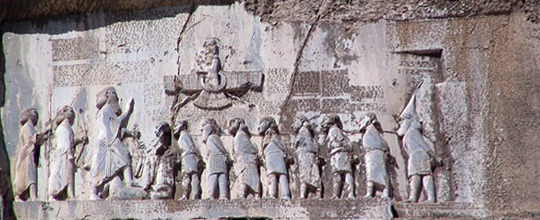
Again, above we see the same Anunnaki throne/chariot leading an army to victory. This relief is in Persia, at the famous site of Behistun, depicting Darius the Great's victories, after the death of Cyrus. It appears the Anunnaki took an active part in the wars of man.


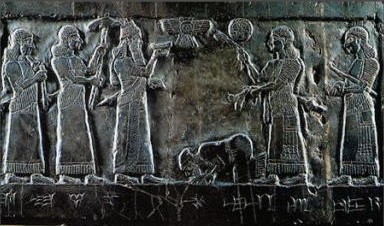
    Another great example of this interference by the Anunnaki in the wars of man is when the Assyrians defeated the 10 tribes of Israel and commemorated that event by raising the famous Black Stele, seen below. In the middle bottom of the stele is Jehu, the King of Israel, who is seen in bonds, and above this figure is the Great weapon of the Anu, the chariot of the Gods of Anu, which assisted in Jehu's defeat.


          In the figure above the Anunnaki are seen here on either side of the tree of life, with their Chariot of the Gods above them. Many historians have determined that this throne chariot, seen above the tree of life, is really an ancient Sun God, but when has a Sun God  taken two hitchhikers, on a ride. This depiction done by the Sumerians of a chariot of the Gods was drawn from what they observed, not some mythological Sun God. The  Anunnaki on either side of a tree of life, with the throne /chariot above them , is repeated over and over in their reliefs.

       An art form of an ancient "Chariot of the Gods" depicted below, was drawn or engraved on nearly every early stele from the time of Sumeria to the Persians covering a period of several thousand years. In most cases the images carried one or more personnel, had wings to indicate flight, and also indicated a wheel within a wheel of eight spokes. Take special notice, the eight spoked wheels on the stele of Naram-Sin and the chariot below are drawn exactly the same. Drawn just behind the figure with the bow.


        The Sumerian relief below shows a Great God riding a four wheeled chariot, with the ability of flight, as shown by the flying sphinx. Just above the chariot is an illustration that demonstrates that the chariots has the ability to launch or throw lightning bolts. Also the lion seems to be throwing destructive flames out of it's mouth. These chariots of the Gods were often an integral part of the wars of man.


                                     Dagan changes his name to Yahweh
   
          In ancient times it was customary to have the names of major cities, and the names of Kings reflect the Gods they worshipped. The word for this is theophoric names. In the royal house of Larsa, their king was named Nur-Dagan, or in the royal house of Isin, 2 kings were named after Dagan, Iddin-Dagan, and Isme-Dagan, the later even went further, to call himself the son of Dagan.

            In the Bible the son of King David is named Baalya or Bealiah which means Baal is Ya or Yehovah is Baal. Baal being named the son of Dagan and who were both worshipped by the people throughout the land of Canaan. Ya is an abbreviation of Yehovah. This to many bible scholars is a paradox, in linking Dagan and Ya, but it points to the fact that both are the same person.

             The name Israel contains the letters of the supreme god of the Egyptians "RA", and the Supreme God of the land of Canaan "El", signifying that they were part of the Hebrews past and present worship. 

            In early Mesopotamia, two Kings, Yahdun-Lim and Yasmah-Addu both show the recognizable theophoric connection to Yehovah, (YA) and both were exclusive worshippers of Dagan. One calling himself the Governor of Dagan. Yahdum-Lim , the King of Mari, in present day Syria, is quoted in cuneiform text recovered from the diggings in Mari, “Yahdum-Lim King of Mari, The God Dagan proclaimed my kingship, who controls the banks of the Euphrates, and gave me a mighty weapon that fells my royal enemies.”

            Again Dagan and the use of his mighty weapon, that destroys the armies of man, is mentioned. This was the very same weapon used with Naram-Sin, for his territorial expansion.  Mari, Yadhun-Lim's capital, has extreme importance today, in that of nearly 25,000 cuneiform texts, were unearthed there.

            Yasmah-Addu, was one of the 2 sons of the King of Assyria, the other being Ishme-Dagan.
Yasmah-Addu ruled in Mari, while his brother and Father ruled the other 2/3rds of the empire. Dagan as their God, is recognizable in their names, along with the use of Ya, and a son of Dagan, named Addu.

            A neighbouring city to Mari, in Syria is Ebla, which in the mid 60's was unearthed  by an Italian   archaeologist by the name of Pettinato. In his diggings he discovers some 20,000 cuneiform texts.


Tablets discovered at Ebla, which is in northern Syria.

            Some of which would drastically change the image of the early near east. Pettinato discovers the divine name Ya, later to emerge as YHWH or Yahweh. The Sumerian name was Dinger Ya-ra-mu, translated God Ya-ra-mu. He also makes a discovery that the letters “EL” are being changed to “YA” at this time in history. EL being the senior deity of the Canaanites to Ya the God of Moses. Pettinato notices that in the translation of the word Mikail, that those now living in Ebla have translated the spelling to Mikaya. For some reason there is a shift in spelling and pronunciation to “YA” in these cities that worship Dagan. It would seem that with the change of worship to a new God, the spelling names of cities and important locations also has to be changed. Both of these cities along with Dagan's major temple at nearby Tuttul were major centres of worship for the God Dagan.    

            As the Akkadian Empire expanded and controlled the majority of the Fertile Crescent, so to did the expansion of worshiping their God.

Fig10.      The below coin from the 4th century BC, is from the location of modern day Gaza, honoring their God which is translated from 3 letters  (YHW). Many believe, these are the people, the Egyptians referred to as the “Sea People”, descendants of early Phoenicians, whose water God was named, Yam-Nahar. Notice the cherub winged throne chariot, that is also evident in Ezekiel's vision of Yahweh's throne chariot.


The texts below are from the three tablets of Sin-mubalit, Hammurabi's father, translated by Deilitzsch in 1902. This text predates Abraham.


            The question is why would Dagan change his name to Yahweh? The answer to that is quite simple. When a God is declaring himself, as Dagan had, the “Creator of Heaven and Earth”, it is difficult for him to convince his seed of that when, Sargon and the Kingdom of Agade, had been completely wiped out. Not exactly an all powerful, all omnipotent, all knowing God. Dagan will take time to rebuild his seed and to reestablish  his earthly kingdom, but he would not use the name Dagan. If Dagan used his name, it would enable his seed to look back and examine at his past failures. Nearly 2 millennium  later his Semitic kingdom is led by another strong central figure very similar to Sargon. His name being Moses.

            The underlying question in all of this, is why? Why is there this aggressive, confrontational attitude between Dagan and  Enlil, the head of the Anunnaki Council? The answer is one of the oldest stories known to man. Both Dagan and Enlil are having relations with the same women. According to Sumerian text both are married to the same women, but are the Sumerians really aware of the fact that one is married and the other is having an affair. Exactly which one is married, has brought some confusion to this ancient story, but from this, centuries of conflict arise. To most modern experts studying ancient Sumeria, this is quite a paradox, of having both Gods, being married to Salas. Salas is said to be married to the Storm God, who is Enlil in Sumerian text, but also to Dagan, but if we look closely at Enlil, he already has a consort, Ninlil, so it appears that Dagan is the god on the short end of the stick. This all adds testimony and credence to Dagan's extremely aggressive nature towards the people of the Sumer valley, some of which are the direct seed of Enlil. Love and hate, the oldest game on earth.

For further reading;
Original images from Nasa;

http://www.youtube.com/watch?feature=player_embedded&v=Aq8vuTQjSfk

http://trueancienthistory.blogspot.ca/2013/05/germany-in-ww-2-builds-chariot-of-gods.html


Thursday, 9 May 2013

The Sumerian Planet of Nibiru


                                                                        Nibiru
  The Sumerian text speaks of a “star” they refer to as Nibiru, the star of Marduk. The actual meaning of Nibiru translates, “place of crossing”, and as many Sumerian words have more than one meaning, Nibiru can also mean a crossing place, as in a road juncture. When Nibiru is used as “star” it is superscribed with a “Mul”. Mul in Sumerian means a heavenly body, such as a star, planet or constellation.  Planets in Sumeria also had a connection to a God, so Nibiru was also superscribed with a “d” which refers to the Sumerian word dingir, or god. Even today the planets are named after ancient gods, a practice that came from the Sumerians.The location of Nibiru and colour of the star, is also stated in Sumerian text.

                  
            “red star which stands in the south after the Gods of the night have been finished, dividing the sky in half, this star is Nibiru “.

            “let Nibiru be the holder of the crossing place of the heaven and of the earth”.

            From these texts it seems apparent that if your near the equator, as the region of Sumer was, and you look directly south, in the early morning sky, (after the Gods of the night have finished), then a red star is seen, as if it stands at the cross roads, dividing the southern sky. Hence the name given to the star Nibiru refers to its position in the southern sky, as midway when looking south.

            Many experts of of Sumerian text, have miss interpreted, the following two texts, in believing that Nibiru is either the planet, Mercury or Jupiter. That was not the original purpose of the text.

            “If Mercury divides the sky and stands there, (It's name) is Nibiru”.

             Notice the word “if” precedes Mercury, to show distinction between the two “stars”. What the writer was trying to convey, was that early Sumerians were often confused between these two stars, Mercury and Nibiru, (possibly because they were seen in close proximity to each other or their similar colour) so the text was telling the observer, was that if the star looks like Mercury, but stands fixed in the middle of the southern sky, it's not Mercury, but it's Nibiru.

            “When the stars of Enlil, have finished, one big star, although it's light is dim, divides the sky in half and stands there, that is the star of Marduk, Nibiru;  Jupiter it keeps changing it's position and crosses the sky.”

            Again the writer of these texts is trying to distinguish these two “stars”. Nibiru continues to perplex the Sumerians, in that it looks like a planet, but unlike planets, it is fixed in the southern sky (stands there). The text is comparing it's movement to Jupiter, which crosses the sky. These texts are not as many suggest, referring to Nibiru as being Mercury or Jupiter, but are simply comparing Nibiru to these two planets.  

            It can be said that Nibiru does not exist in our present day southern sky , so what was Nibiru? There is only four things in our solar system that move across the sky, and they are, planets, moons, comets and asteroids, but Nibiru is fixed in the sky. So by simple elimination, Nibiru cannot be any of these four. So what were the ancient Sumerians seeing in their southern sky?

            There is no Sumerian text linking Nibiru and the Anunnaki. There is no text suggesting that Nibiru is the “home planet” of the Anunnaki. There is one piece of coincidence, and that both the Anunnaki and the star Nibiru both vanished from existence soon after the flood occurrence.

            My three theories; and they may seem remote to some:
          
            1)That Nibiru was a planet. For some reason this planet exploded and is now seen as the asteroid belt. The Anunnaki were therefore destroyed along with it. It seems to be the simple answer and explains everything.

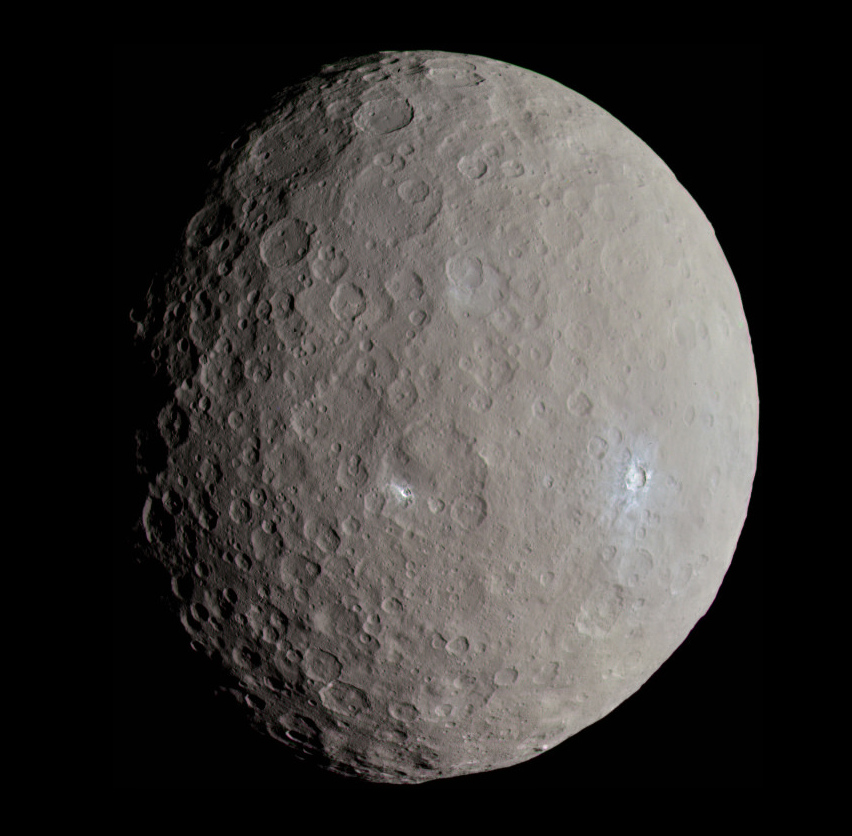
             A German astronomer, Heinrich Olbers, in 1807, in his effort to find the 7th planet, using Bode's Law, found 2 asteroids instead. He would later remark;

 “Could it be that Ceres and Pallas are just a pair of fragments…of a once greater planet which at one time occupied its proper place between Mars and Jupiter?”


         The asteroid belt falls in the region, as predicted by Bode's Law, that should support a planet. Is this the 7th planet, that once existed, the ancients saw, and described in their skies? Those that continue to disregard this, often point to the fact that the asteroid belt's total mass is too small to account for a planet. That's a valid point, but one must consider that most of the planet's material would have been consumed by the Sun, and a large amount collided with the planets and moons of the solar system. Also a large number of Trojan asteroids follow each planets orbits. The Earth, Jupiter, and Uranus all have pilot or Trojan asteroids.
  
            The point of intrigue  is that the Sumerians knew of 5 planets, from Mercury to Saturn. Not counting Earth, but they always visualize 7 planets in their art.  The point is if Nibiru was a planet, and with the Earth included, that would give them their 7 known planets up to including Saturn.

             Below the ancient Stela of Adad-Nirari found in Iraq in 1967, showing at the upper left, the seven orbs representing the seven known planets, and though to also represent Enlil, the symbol of the crescent  moon representing Sin and the 8 pointed star of Venus venerating the Goddess Ishtar. The upper right is the winged chariot of the Gods, and a number of symbols representing various Gods. All these symbols are reproduced over and over again in these ancient reliefs and steles.


                                      The stela of Sennacherib below shows the King standing before the symbols of the Great Gods including the winged Chariot of the Gods and the 7 planets.


            2nd)                                   The Star of Civilization 
           An Ancient star existed in the Southern sky, that was thought to begin the advancement of mankind's knowledge. From the study of this star early mankind developed mathematics and science.
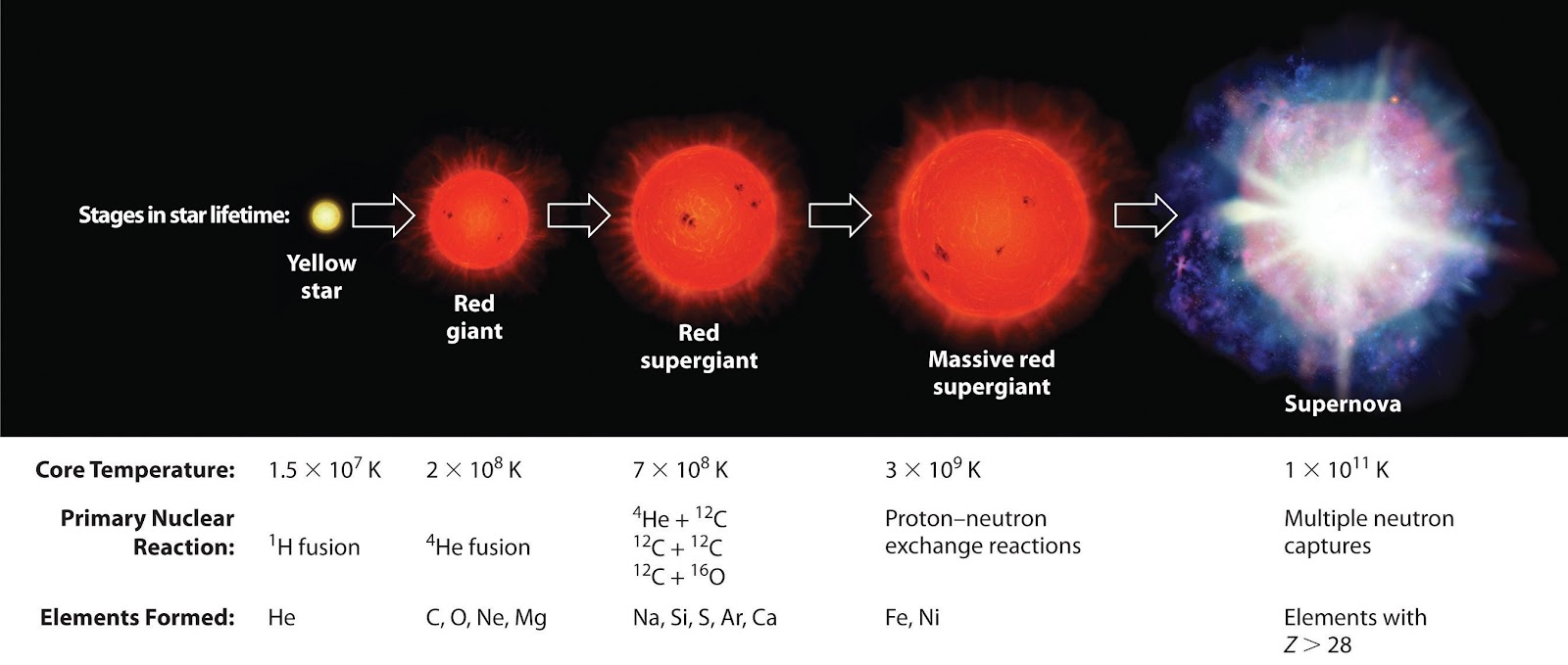
A star is basically a fusion reactor, taking two hydrogen atoms with the help of tremendous heat and pressure, producing a Helium atom. As the giant furnace runs out of hydrogen atoms a super giant red star is produced. A super giant red star is very bright and very large. Over 1 million times brighter than a sun and over 1000 times larger. This giant state lasts for a considerable time until this giant red star goes supernova. It explodes and disappears. This results in expanding gas that often forms into recognizable nebulas.


           The Vela Supernova exploded some 11,000 to 12,000 years ago, and all that's left is some expanding gas that can be seen today is the Pencil Nebula as seen below.


            What is of interest in this Supernova is that it exists low in the southern sky over the Persian Gulf, mid way across the southern heavens. Prior to going supernova this red giant star would have been very visible from ancient Sumeria. Brighter and larger than Venus. Vela Supernova is very close to earth, being only 800 light years away.

             The existence of this giant red star is collaborated by the Sumerians calendar which began in 10,800 BC and the Sumerian wrote extensively of this red "star" that was fixed at  the cross roads of the southern sky. Not a planet, but a red star that now no longer exists..All this points to the fact that Nibiru was that giant red star of Vela before going Supernova, that the Sumerians wrote about.

            Nibiru was not a Sumerian myth or children's story, but it existed and was studied by the Ancients.

            3rd)That Nibiru was seen by the ancients, but cannot be seen today, may indicate that it still exists. but we are unable to be seen, for whatever reason. Is it possible that Nibiru has slipped back in time so that we are no longer able to see this planet? It's like arriving at a location, where your meeting your friend, but he's 10 minutes late, and he's always 10 minutes late, so in effect you will never see him. The Omega symbol may be that link. A link connecting another time line. The ancient Anunnaki in their reliefs were pointing upward, as if they now saw something, as if something can now be seen, that was otherwise hidden. (as in the reliefs below)   Were they in effect looking back in time, while being in the present? Was this the two worlds, or two different states of being that they were trying to depict, between the tree of life?


            In the relief above, taken from the Assyrian palace walls at Calah, we can see two Anunnaki on either side of the Tree of Life, again they're pointing to the throne/chariot above, as if saying, “ Look, we can see it.” This and similar reliefs reoccur time and time again. The ancient people  were simply engraving what the saw, and for the most part, not having any understanding what they were drawing. 


      In above relief, we see the Anunnaki on either side of the tree of eternal life, pointing up, as if drawing our attention to the throne/chariot. As if saying; “Can you see it or can you see me”. What originally appeared as landing feet of the throne/chariot of the gods, are now water (sign of water is a waving line, similar to the Egyptian symbol for water) drawn down, as if they're an extended  with the Omega symbol ( Omega symbol was a symbol of life or the extension of life). These are not landing feet, but are means of which the Anunnaki are able to see, and transfer from the underworld to our world. The figure on the left in the underworld, to the figure on the right in our world, through the tree of eternal life. In Sumeria and in many other ancient societies, the Tree of life, is a phallic symbol, representing the erect penis, and from it eternal life grows. Tree in the Sumerian language is the same word as penis. The Sumerian language also used the same word for water, as the word for semen. Water or irrigated water, was the source of all life, the seed of life, and it represents eternal life.

The gods of Armageddon.  Sometimes they come back ...
In the Assyrian relief above, again we see two Gods knelling between the tree of life, in honour of the Chariot of the Gods. Again the lines linking the chariot sun disc with the Omega at each end.        

 Was the Abzu the means to exit and enter between these two worlds? Would not moving back to a different time line extend your life, hence the perception that the Anunnaki lived much longer than mankind on earth. That Nibiru could still exist today, but only through special set of circumstances are we allowed to see the Universe as it really is. Is this the same for the earth's hidden and dark secret place where no man may find? Are we unable to find this secret place simply because we lack a technology? A technology to see what is hidden. Time will always answer.

For further reading;

http://trueancienthistory.blogspot.ca/2012/11/kronos.html

The Sumerian ABZU


                                                           The Abzu

            The Abzu which is often spoken of in Sumerian text, and literally means “Distant water”; ab meaning water, and zu translates, far, distant or deep. Many experts have deciphered this, as place that originates ground water. Fresh water that maintains life, with the use of irrigation, but is this the true meaning of the Abzu?

            In the Hymn to Elil, the text reads.. “the Abzu which no one can understand. It's interior is a distant sea which Heaven Edge cannot comprehend”. In the curse of Agade, the text reads.. “Abzu... where the fates are determined”. In Sumerian text the Abzu is always preceded by the article “the”, which lends the belief that the abzu is a state of being or state of mind v.s. a specific location. As an example one might say they are going to New York, a specific location, or they may say they are planning to go to “the” city, which implies a state of being, as in shopping, nite life or dinning out.

            In the Sumerian text relating Inana, (Enki's daughter) and Enki; Inana speaks, “I shall direct my steps to Enki, to the abzu, to (Eridu), and I myself shall speak coaxingly to him, in the abzu, in (Eridu). Directed her steps all by herself towards Enki's abzu  in (Eridu).....Enki the King of the Abzu. ...The lord (Enki) looked up at the abzu.”

            It becomes apparent that the Abzu, is something that is a lot more than a simple source of underground water.  We know that from these texts that Enki is the source of the Abzu, and it is located in his city of Eridu. Enki is also recorded in the above text, to have to look up to the see the Abzu. To have to look up in a land that is extremely flat, must mean that Enki is looking up to the top of the highest building in Eridu, which would be the temple, Ziggurat. This is confirmed by a fragmented text, of the Heron and Turtle, which reads.. “Then on the Ziggurat...King Enki was on the Ziggurat, the great brickwork of the Ziggurat...the abzu, the brickwork of the abzu.”


            In the middle figure (1) above an Anunnaki is climbing the Ziggurat at Eridu ,the 7 tiers of the structure are shown as coned levels, to speak to Enki, seated on his throne to the right, which is surrounded and encased by water.(Water is indicated by long wavy lines) Notice also that on the far left and far right are his attendants with their water poles. Could not this be the Abzu, that Inana speaks of when she wishes to speak to Enki? The second figure on the left is a Great God coming out of the Abzu atop the Ziggurat. The Abzu here seems lined with woven reeds, the same method used to build their boats and make their roofs water tight. The reeds are needed to keep the Abzu water tight to support a pool of water. Notice that the Ziggurat is always illustrated using the same markings in each illustration,as in many rounded conical triangles. This helps the viewer in understanding the depictions.

            In the figure (2) below Enki is seen climbing to the top of the Ziggurat at Eridu, followed behind by his minister Isimud (to his right). At the top of the Ziggurat, an Anunnaki  is coming out of the Abzu, while water is being poured on top of him, as if exiting from a watery state. Notice again the Ziggurat illustration is always duplicated as stacked cones. Is this the location of the Abzu, that is a state of being, rather than a specific location, mentioned in Sumerian text?


            If the Abzu represents a state of being, rather than a defined location atop the Ziggurat, then it must refer to a ceremony, a purification, or inauguration of some importance.


           In the figure (3) above and below, we see Enki again, surrounded by a water enclosure, with his two attendants and poles, on either side of him. This depiction is seen as a top view, as if looking down from atop the Ziggurat, with Enki about to leave, his Abzu. In the curse of Agade, the text reads.. “King Enki,emerges from the Abzu.”


      In the figure (4) above we see the Enki , inside Abzu, atop the Ziggurat with his 2 pole bearers. This all raises the question. What exactly is this ceremonial practice, and what is it's purpose? The Sumerians speak of a “washing of the hands” ceremony, which occurs at the site of the Abzu or in the Abzu. If the washing ceremony occurs in the Abzu, could it refer to a full emergence into water, or through water, as a number of the figures above seem to indicate. In the creation of man text, it speaks of Enki taking clay to form man at the Abzu. In the curse of Agade text, it reads, “May your clay be returned to it's Abzu.” This seems to indicate that “life, creation of life , or the extension of life” would have a significance to understanding the Abzu and it's ceremonies.


            In figure (5) above we see an Anunnaki emerging from the Abzu atop the Ziggurat as depicted at the very bottom of the relief. Two upturned vases are pouring water into the vases at the bottom of the relief. The Anunnaki seems to have control over the water.  At the bottom of the figure are four wheels of 8 spokes. They represent the wheels at the four corners of the Chariot of the Gods, as does the other four wheels with 16 spokes. The wheel within the wheel. There is clearly a strong connection between the Chariot of the Gods, and the Abzu, which together enhances the abilities and life of the ancient Gods.


           In the above figure (6), again the water is pouring from the top vases to the bottom vases as in the Abzu, while the occupant of the Abzu seems to be in a state of ecstasy and is some how connected to the Chariot of the Gods, similar to figure (5). This is very similar to the depictions of Enki and his ability to control water from his body. The Sumerians had the same word for water as for semen, which meant "the beginning of life or the renewal of life", just as irrigated water brings life to a desert. The above figure also seems overjoyed if not in a state ecstacy while in the Abzu. The water is somehow transformed from the Chariot as it enters the Abzu. Both of the above figures are gaining a renewal of life as the water passes over them.

           The real purpose of the ABZU? The Abzu is able to transform water to allow the Great Gods to extend their lives. Once in the Abzu they totally immerse themselves in it's water. Without the Abzu the Great gods would simply have grown old like the rest of mankind and eventually died. They had to continually enter the Abzu and immerse themselves in it's water in order to extend their lives. This is the state of being that is referred to as "entering the Abzu". A state of rejuvenation. An exhilarating moment where water itself can be controlled and where one seems to levitate inside the Abzu.   This act of growing younger is seen in an ancient Assyrian scroll shown below. An old man becomes young again as they are about to drink water from the chariot..     


                                                       It's clear that the Abzu is controlled by Enki. This is shown (figure 7 below) by how Enki is depicted in ancient reliefs. The seven stepped Ziggurat is seen as a great god approaches Enki.  Enki is seen having water or controlling water from his body, with the pole bearers on either side. Enki is seen to the right  atop the Ziggurat, as shown by the figure on left, and at the centre of the Abzu, with water surrounding him.
(figures below shows the 2 pole attendants)


                    The wavy lines represent water in Sumerian drawings, and it's this water that has been transformed by the chariot of the Gods and is about to be extracted by the figure on the left..This is the water that these Great Gods immersed themselves in the Abzu and extend their lives...This is what is represented by the Tree of life in the middle of the figure..
The water after being transformed....and now gives life.


            The great god shown above is not taking water to the tree of life as many have suggested but taking this transformed water away to be used to extend their lives. This is shown by the bucket in the figures hand.

            Enki's position within the Anunnaki is greatly enhanced due to his control of the Abzu and his possession of the Tablets of Destiny. The combination of these two items which either enhance, empower or entitle each other, makes Enki a very important and powerful personage.

            In the Sumerian text of the curse of Agade, Ninurto takes from Agade all it's wealth, just prior to it's destruction, to Enki's Abzu. The text also reads that the Abzu at Agade has it's poles removed. Thus terminating the ability or power of the Akkadian Abzu. The text also refers to the wealth of Agade's royal throne room. This wealth is stripped from Sargon's royal family. Where does the wealth of Agade's Treasury end?

            The text reads, “Ninurto brought the jewels of ruler ship, the royal crown, the emblem and the royal throne bestowed on Agade.” In Isaiah chapter 45, YHWH speaks of a dark and hidden place, that No man may know, where the treasures of the kingdoms of earth are hidden. After Enlil destroyed Yahweh's political kingdom on earth, the Akkadians, and Enki took all their treasures prior  to the fall of their capital city Agade, was Yahweh retaliating in seizing many iconic earthly treasures of earthly kingdoms, just prior to their downfall? Did Yahweh seize Babylon's earthly treasures just moments before she fell to Cyrus the Great?  Isaiah 45:3, reads as if speaking to Cyrus, “And I will give you the treasures of darkness, and the hidden riches of secret places,..” The word “darkness” would refer to a  fearful and forbidding place to man, while “hidden” and “secret” would refer to, No man being able to find these iconic treasures.

           Are these treasures stored in an ancient Abzu?

           To name a few treasures that no man has found, would be the ark of the covenant and the Cup of Samurais, which weighed 15 talents of gold, or about 1500 lbs. This was essentially a very expensive punch bowl, for rather lavish parties. Golden icons were never melted down or destroyed in ancient times, but seen as war booty, to display over ones enemies. It wasn't until the Greeks, that gold was a means to pay foreign trade accounts or used as a currency reserve. Prior to the Greeks, gold was basically bathroom fixtures for the ruling class. Would many of these iconic pieces, still be hidden from us?

For further reading;

http://trueancienthistory.blogspot.ca/2013/05/the-babylonian-history-of-mankind.html